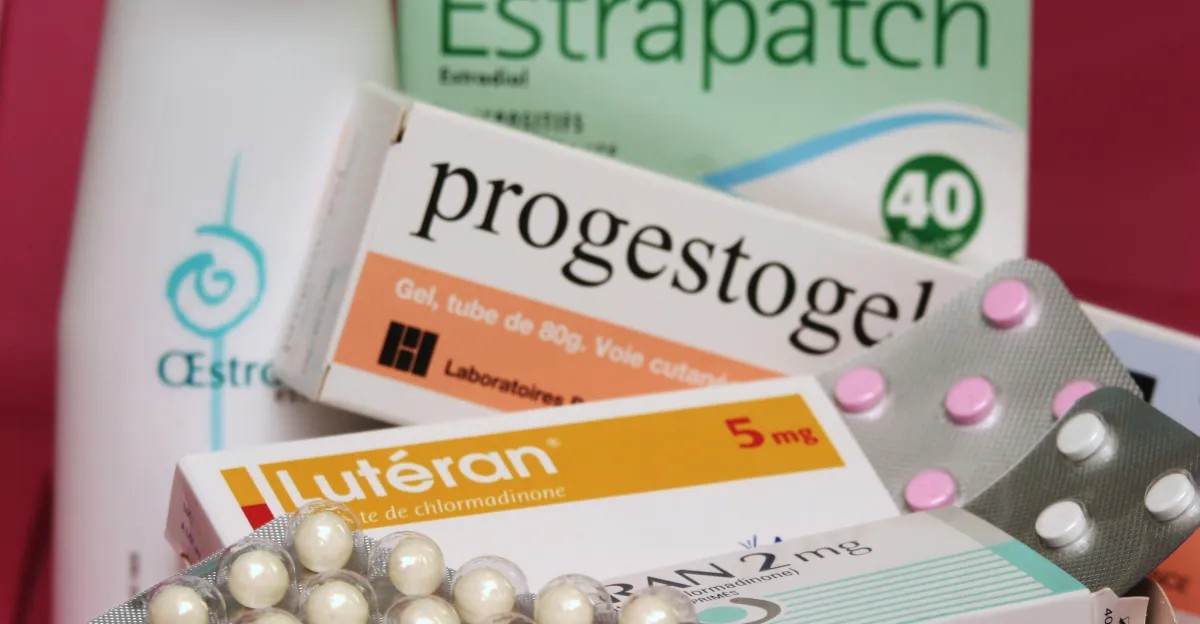
It is 2024. We have mapped the human genome. We are sending rovers to Mars. We have treatments for diseases that would have killed our grandparents in days. Yet, when a woman walks into a clinic complaining about hot flashes, brain fog, or heart palpities during the transition to menopause, she often hits a wall.
The gap between modern capability and actual care is massive.
Dr. Elizabeth Comen, a medical oncologist at NYU Langone, points to a root cause that isn’t medical, but cultural. “Medicine often mirrors what’s happening in society,” she says. For centuries, women lacked agency. Their bodies were not their own. That power dynamic didn’t just vanish; it calcified into medical practice.
Today, nearly half of Americans turn to social media for health advice because the traditional system failed to listen. This disconnect is dangerous. We are seeing rising rates of heart disease in women, widespread skepticism toward birth control, and a flood of unverified influencers selling snake oil to desperate patients.
But how did we get here? And what does it actually take to fix a healthcare system that has spent 200 years ignoring half its population?
When Women Were Called “Small Men”
To understand the current crisis in perimenopause and women’s health, you have to look at the history. Before the 20th century, modern specialties like cardiology or gastroenterology didn’t really exist as we know them. In the Western medical canon, the prevailing theory was brutal in its simplicity. At best, women were considered “small men.” At worst, they were pathological.
If a woman complained of anxiety, fatigue, or pain, the diagnosis was often “hysteria.”
The idea of medical science came to rise in the late 18th century, pushing out midwives and healers who had cared for women for millennia.
Women were not taken seriously because the caregivers who actually tended to women’s bodies—midwives, traditional healers—were systematically excluded from formal medicine. By the time science became codified, it was dominated by a perspective that viewed female biology as a deviation from the male norm, rather than a distinct, valid experience.
This exclusion meant that conditions specific to women were either ignored or misdiagnosed for centuries.
Perimenopause: A Latecomer to the Conversation
Perimenopause is a relatively new term in the public lexicon. It didn’t just appear overnight. It emerged as we finally began to understand hormones.
Before the 19th century, the concepts of estrogen, progesterone, and testosterone were nonexistent. Scientists didn’t yet grasp that these chemical messengers traveled through the body to regulate function. Without that biological vocabulary, there was no way to describe the transitional phase before menopause.
Even as hormone replacement therapy (HRT) gained traction in the mid-20th century, the discourse was deeply insulting. Roger Wilson, a prominent physician in the 1960s, wrote Feminine Forever. He referred to women undergoing menopause as “vapid cows.” His advocacy for HRT was less about patient well-being and more about preserving a specific, narrow standard of femininity.
The science was primitive. The attitudes were worse.
The Mouse Problem and Exclusionary Science
The mistrust many women feel toward their doctors today isn’t baseless. It is rooted in data. For decades, clinical trials excluded women.
The National Institutes of Health didn’t mandate the inclusion of women in clinical trials until 1993. Before that, drug development followed a predictable path: test on animals, test on men, assume women will react the same way.
The data supports the fear. Animal models, particularly mice, are not gender-neutral. Until 2016, researchers were not even required to disclose the sex of the mice they were using. Often, female mice were excluded entirely from drug development studies because researchers worried that hormonal fluctuations would complicate the data.
So, a drug could be deemed “safe and effective” based on male physiology, then prescribed to millions of women with unknown side effects. This wasn’t just negligence; it was a structural design flaw.
Marketing Fear and Fake Cures
This history of exclusion created a vacuum. Women went to doctors and felt unheard. So, they went elsewhere.
In the 1950s and 60s, pharmaceutical companies filled that vacuum with anti-anxiety medications. Advertisements targeted women who couldn’t “manage their household.” The message was clear: sedate yourself to serve your husband.
Today, the dynamic is similar, just digitized. Women sink billions into “sham supplements” and unproven treatments because the healthcare system offers them little else.
Women sink billions of dollars into sham supplements because they don’t feel cared for at the doctor. What fills that void? Influencers marketing things with no proven evidence.
The pendulum on hormone replacement therapy swung wildly. In the 70s, the mantra was “every woman needs it.” Then came the Women’s Health Initiative, which highlighted risks of breast cancer. The media panicked. Women were terrified into abandoning HRT without being given alternatives.
Now, the conversation is more granular. We understand the risks and benefits better. But the trust is still shattered.
The Influence of Instagram on Health
Dr. Comen describes a growing terror in the face of social media health advice.
The internet is flooded with fake imagery and uncredentialed “experts.” People are faking knowledge. They are selling solutions to problems that are complex and multifaceted.
Is this any different from the midwife-bashers of the 1800s?
In some ways, yes. The source of authority has shifted from the patriarchal medical establishment to algorithmic influencers. But the result is the same: women are wasting money on over-promising products while their actual physiological needs are ignored.
The fear-mongering is out of control. It drives patients away from legitimate care and into the arms of profit-driven scammers.
Rebuilding Trust in a Fragmented System
How do we fix this? How do women trust their doctors again?
Dr. Comen is blunt. We can’t just blame patients for going to Instagram. We did this to ourselves.
The modern healthcare system is fragmented. Doctors have minutes to see patients. They don’t have time to “hold space” for a woman describing years of subtle, shifting symptoms. Medicine has reduced bodies to biology, ignoring the human element.
Trust is built through time. Through listening. Through acknowledging that a woman’s experience is real.
Despite all the technology available, medicine is fundamentally about human-to-human care.
We need a system that invests in long, laborious, quality science rather than quick fixes and influencer marketing. We need doctors who treat patients as humans, not just collections of organs.
The conversation about perimenopause is finally happening. That’s progress. But until the system catches up to the science, and the culture catches up to the patients, women will continue to navigate a healthcare landscape that feels like it was designed by people who’ve never felt a hot flash.
And that’s a gap that still needs closing.