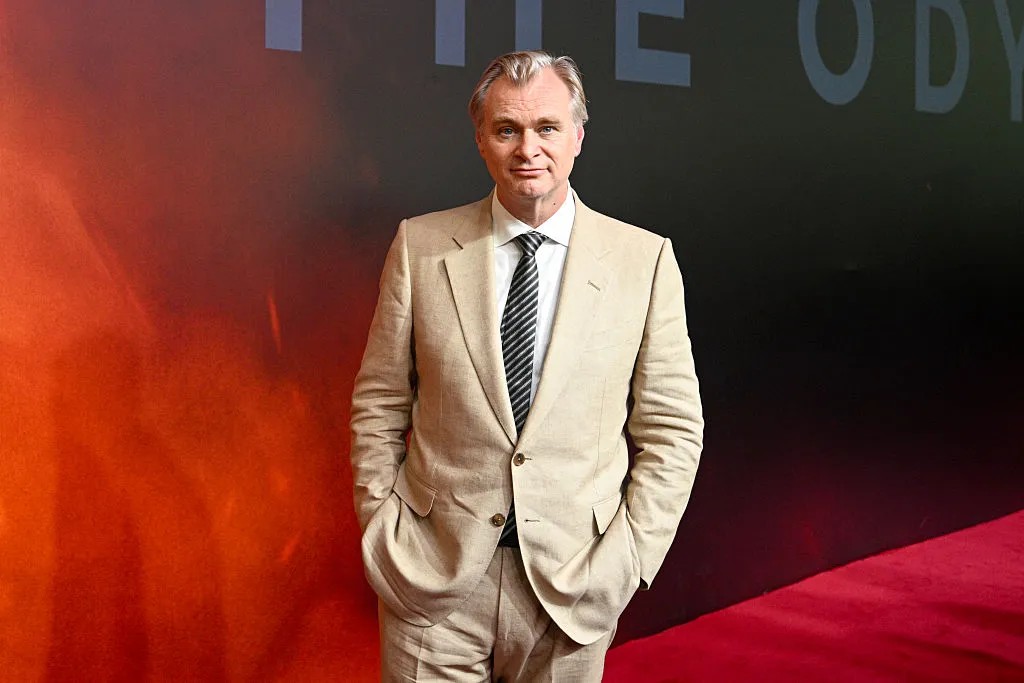
The skepticism is real. It’s loud. And according to Christopher Nolan, it’s exactly what we need.
The Oppenheimer winner is currently riding a massive wave with The Odyssey. It’s a box office juggernaut. But while the film dominates theaters, Nolan is fixated on a different kind of threat lurking in the digital ether: Artificial Intelligence.
He isn’t buying the hype. He sees AI as a “Trojan horse” that everyone knows contains Greek soldiers. A transparent Trojan horse, made of glass. You can see the danger. You can still walk inside it anyway.
The ‘Glass Horse’ Metaphor
It started with a simple question from Hugo Travers (known on YouTube as HugoDécrypte). Travers invoked the legend behind Nolan’s film. The horse was a gift that hid murderers. He asked if AI was similarly a gift we welcome, only to find it turns dark and sinister.
Nolan laughed. Then he dismantled the premise.
“I think AI is a Trojan horse everybody knows the Greeks are inside. I’ve never seen a technology advancing so rapidly that’s been so completely rejected by the public.”
This rejection isn’t subtle. It’s visceral. Young people, particularly those of Nolan’s children’s generation, are labeling AI-generated content “AI slop.” They’re putting it in a box. They’re dismissing it immediately.
Nolan calls this “very healthy.”
Why? Because technology always offers great gifts. But blind faith in those gifts is dangerous. The motives of the corporations pushing these tools also deserve scrutiny. Suspicion is the only rational response to a tool being forced into daily life before society has a say.
Hollywood’s Wake-Up Call
Nolan didn’t detail the specific mechanics of the AI threat here. He didn’t need to. The industry has been screaming about it.
The 2023 strikes weren’t just about pay. They were about survival. Writers and actors saw their livelihoods threatened by generative models that could replace them without consent or compensation. The Directors Guild of America, led by Nolan, secured protections for generative AI in their latest contract. These wins matter. They set boundaries.
This resistance fits a longer pattern. Nolan is no stranger to pushing back against new tech. He famously avoids smartphones. He clings to film stock. It makes him seem like a Luddite to some and a pioneer to others.
But he corrects the record on that label.
“I think of myself as a techno-skept,” he told The New York Times.
He embraces new tools. He just refuses to throw the old, viable ones out. The industry’s rush to digitize everything, including the cinematic image itself, nearly killed film. We almost lost it.
“We almost lost film!”
Film represents the way the eye sees the world better than any digital imaging system he’s encountered. That’s the metric that matters to him. Fidelity. Reality. The tangible.
The Skeptic’s Defense
The contrast couldn’t be sharper. While Nolan champions analog authenticity, Elon Musk is busy attacking the cast of The Odyssey. Musk has been posting angrily about the film’s non-white and transgender actors. It’s a distraction. It’s noise.
Nolan’s noise is about the medium.
He worries that new technologies are sold at the expense of existing systems. We discard what works. We trade depth for convenience. We lose the “baby” with the “bath water.”
AI advances rapidly. The public rejects it rapidly. The result is a stalemate.
Nolan sees this stalemate as good. It forces a pause. It demands scrutiny. It prevents the industry from making irreversible mistakes in the name of progress.
The glass horse sits there. Clear as day. The Greeks are inside. Are you going to invite them in?