


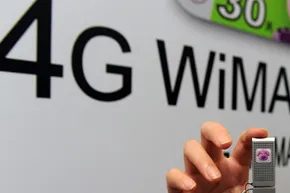
Although the “4G” label has been touted in the telecommunications industry for years, it is not a standardized name for the technology. This is just a marketing term for the next step in speed improvement. By Sprint’s definition, 4G has been around since 2006. The original network was based on WiMAX. This was one of the early approaches to fourth generation connectivity.
All major service providers now offer some form of 4G network. These systems are in different stages of development and scope. They are based on one of the three main mobile phone connection technologies: LTE, HSPA+ and WiMAX.
How WiMAX works and the reasons for its decline
WiMAX stands out among cell phone access methods. It is based on the 802.16 wireless standards. These standards are the same as those used in home or office wireless broadband Internet. The Mobile version of WiMAX uses the second iteration of these standards, 802.16e. This version supports mobile use.
This technique uses orthogonal frequency division multiplexing (OFDM). This method separates the signal data into multiple channels. The goal is to speed up delivery. The target device then combines all the bits back into a single unit. The theoretical data transfer speed of WiMAX is about 40 Mbps. Reality is usually much less.
HSPA+: 3G infrastructure upgrade
HSPA+ is a different matter. This is an upgrade to the long-standing cellular approach, HSPA (High Speed Packet Access). HSPA is built on the 3G WCDMA infrastructure. This infrastructure transmits signals in one or two frequency bands depending on the mode.
In normal 3G format, the maximum data transfer speed of HSPA networks is 14.4 Mbps. Operators can achieve up to 21 Mbps HSPA+ speed. This is achieved by using higher order QAM or Quadrature Amplitude Modulation. This technique encodes multiple data streams into a single transmission. It mimics increased bandwidth. Antenna improvements could further increase HSPA+ transmission speeds.
Moving to LTE
WiMAX and HSPA+ both offer significant speed improvements. Many in the cell phone community consider these to be transitional technologies. The 4G network most people expect is LTE.


