
Computer viruses are a logistical nightmare. They can erase your hard drive. They can clog network traffic for hours. They can turn your innocent machine into a zombie, replicating itself and sending copies to every contact in your address book.
If you’ve never seen a machine fall victim, you might wonder what the fuss is about. The concern is valid. Consumer Reports estimated that computer viruses contributed to $8.5 billion in consumer losses in 2008 alone. They are just one slice of the online threat pie, but they are arguably the most famous.
The Theory Before The Malware
Computer viruses have been around for decades. The concept actually predates the modern internet. In 1949, scientist John von Neumann theorized that self-replicating programs were possible. The computer industry was barely a decade old. Someone had already figured out how to throw a wrench into the gears.
It took a few more decades for programmers known as hackers to actually build them.
Early virus-like programs targeted large mainframes. But the personal computer changed everything. It brought the threat to the public eye. Fred Cohen, a doctoral student, was the first to describe self-replicating programs designed to modify computers as “viruses.” The name stuck.
From Floppy Disks to Email Chains
In the early 1980s, viruses relied on human labor to spread. A hacker would save the code to a floppy disk. They’d distribute the disk. You’d plug it in. The infection took hold.
Virus transmission didn’t become a real problem until modems became common. Today, we imagine computer viruses spreading via the Internet. They infect computers through email messages or corrupted web links. These digital strains move much faster than the earliest physical versions.
We are going to look at 10 of the worst computer viruses to cripple a system. Let’s start with the Melissa virus.
10: Melissa

David L. Smith didn’t just write code; he wrote a cultural marker for the dawn of the internet age. In the spring of 1999, he engineered a Microsoft Word macro virus that would become one of the first digital threats to truly grab the public’s imagination. Smith named it Melissa, pulling the moniker from an exotic dancer he knew in Florida. The choice was ironic, given the virus’s behavior, which was far less about allure and more about aggressive, automated replication.
The mechanics of the infection were simple but devastatingly effective. The virus disguised itself inside an email message with the subject line “Here is that document you asked for, don’t show it to anybody else.” It played on curiosity and secrecy, two things people are notoriously bad at guarding in professional settings. When a recipient opened the attached document, the macro activated. It didn’t just sit there. It scraped the victim’s Outlook address book and sent copies of itself to the top fifty contacts.
The Melissa Virus and Government Response
The spread was exponential. Within days, network administrators were drowning in traffic. The United States federal government took notice. According to statements made by FBI officials to Congress, the Melissa virus wreaked havoc on government and private sector networks. The sheer volume of infected emails caused mail servers to bog down. Some companies were forced to discontinue their email programs entirely until the spread could be contained.
Smith was eventually caught. The legal fallout was swift and severe. After a lengthy trial process, Smith lost his case and received a 20-month jail sentence. The court also fined Smith $5,000 and forbade him from accessing computer networks without court authorization. While Melissa didn’t permanently cripple the global internet, it served as a wake-up call. It proved that code written for office productivity could be weaponized to bring corporate infrastructure to its knees.
Flavors of Viruses
To understand why Melissa was so dangerous, you have to look at how malware is categorized. Most people use the term “virus” as a catch-all, but the technical distinctions matter for defense and understanding.
- Computer Virus : This is the general term for programs that modify how a computer works, often damaging files or systems. A true virus requires a host program to run properly. Melissa used a Word document as its host. It couldn’t exist independently.
- Worm : Unlike a virus, a worm doesn’t require a host program. It’s a standalone application that can replicate itself and send itself through computer networks directly. It’s faster, self-sufficient, and often harder to stop because it doesn’t need a user to open a file.
- Trojan Horse : These programs claim to do one thing but really do another. They might look like legitimate software or games. Once installed, they can damage a victim’s hard drive or create a backdoor, allowing a remote user to access the victim’s computer system.
Understanding these differences isn’t just academic. It changes how you protect your data. If you know a threat is a worm, you focus on network ports and firewalls. If it’s a Trojan, you focus on user education and source verification.
Old-school Viruses
Before Melissa, there were other early infections. Some of the earliest viruses to infect personal computers included the Apple Viruses, which attacked Apple II computers in the 1980s. These were less about mass destruction and more about experimentation, but they laid the groundwork for everything that followed. The evolution from simple pranks to network-destroying code like Melissa marked a shift in intent. The malicious actors weren’t just showing off; they were testing the limits of connectivity.
9: ILOVEYOU
The pattern established by Melissa didn’t disappear. It evolved. A few years later, another email-borne threat would emerge, one that would dwarf Melissa in terms of global impact. It
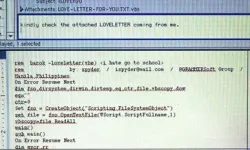
It had been exactly one year since the Melissa virus swept across the digital landscape. The next major threat didn’t come from the usual suspects. It emerged from the Philippines.
This wasn’t a macro virus like Melissa. It was a worm. Standalone. Self-replicating. It carried a name that would become infamous: ILOVEYOU.
The delivery mechanism was deceptively simple. Like its predecessor, it traveled via email. The subject line was a hook: “Love letter from a secret admirer.” The attachment? LOVE-LETTER-FOR-YOU.TXT.vbs.
That .vbs extension was the telltale sign. It pointed to Visual Basic Scripting, the language the creator used to build the engine of destruction.
McAfee later cataloged the full scope of the damage. The worm didn’t just copy itself. It buried copies in various hard drive folders. It injected new entries into the Windows registry. It overwrote specific file types with its own code. It spread through Internet Relay Chat (IRC) clients, not just email.
And then there was the payload.
The worm downloaded a file named WIN-BUGSFIX.EXE. It executed the program. The name implied a system repair tool. In reality, it was a credential stealer. It grabbed passwords and other sensitive data, then emailed the loot directly to the hacker.
The Creator and the Cost
Who built this? Most eyes pointed to Onel de Guzman, a Filipino student.
Philippine authorities investigated him for theft. The legal system, however, had a gap. At the time, the Philippines had no laws specifically addressing computer espionage or sabotage. Without the right statutes to pin him to, the charges were dropped.
De Guzman never confirmed his role. He never denied it either.
The financial toll was staggering. Estimates placed the damage at $10 billion globally. It remains one of the most expensive cyberattacks in history.
The Fake Menace: Virus Hoaxes
With the love fest over, the digital world faced a different kind of noise. Not malware. Not worms.
Virus hoaxes.
These aren’t real threats. They don’t replicate. They don’t corrupt data. They are fabricated warnings designed to panic users and media outlets. The goal is attention. The effect is fatigue.
Consider the “boy who cried wolf” dynamic. When every email claims to be a deadly, unstoppable virus, people start ignoring the alerts. Eventually, when a real threat arrives, the warning signs are dismissed as just another hoax.
It creates a layer of skepticism that hackers can exploit. If you can’t tell what’s real, you’re vulnerable to everything.
The Klez Virus
The next chapter in this era of widespread digital panic involved a virus with a name that stuck: Klez.

The Klez virus arrived in late 2001 and signaled a shift in how threats operated. It didn’t just infect; it spread with a sophistication that previous malware lacked. Variations plagued networks for months, setting a new standard for speed and stealth.
The core mechanism was simple but devastating. The worm entered via email. Once inside, it replicated and used the victim’s own address book to send copies to contacts. But it wasn’t just a nuisance. Some versions bundled destructive payloads that could cripple systems. It blended behaviors. In some cases, it acted like a traditional virus. In others, it behaved as a worm or a Trojan horse.
The most dangerous aspect? Klez could disable antivirus software. It even impersonated removal tools to trick users into disabling their own defenses.
The Art of Spoofing
Hackers quickly refined the code. They realized that simply sending emails wasn’t enough. They needed to bypass human skepticism.
Enter spoofing.
The virus modified the “From” field. It didn’t just send from itself. It pulled a random name from the victim’s contact list and used that address. The email appeared to come from a friend, a colleague, or a known entity.
This tactic served multiple purposes. Blocking the sender was useless. The real source was hidden. A victim couldn’t simply block the address in their client because the address was fake. The spam could clog an inbox rapidly. Recipients had no way to trace the true origin.
Recognition played a psychological role. People are more likely to open emails from known contacts. If the “From” field showed a trusted name, the recipient’s guard dropped. They clicked. The worm spread.
Defending Against the Spread
Protection requires strategy. You need antivirus software. You must keep it updated. Rules are strict. Do not install multiple suites. Overlapping programs interfere. They conflict. They slow your system. They create vulnerabilities.
Several major threats emerged in 2001. The landscape was changing.
Common tools for defense included:
- Avast Antivirus
- AVG Anti-Virus
- Kaspersky Anti-Virus
- McAfee VirusScan
- Norton AntiVirus
Keeping one of these active and current is the baseline. Nothing more. Nothing less.
Beyond Klez
The web evolved. The threats evolved faster.
7: Code Red and Code Red II
The next wave targeted servers. The focus shifted from individual users to infrastructure. The implications were broader. The damage was deeper.
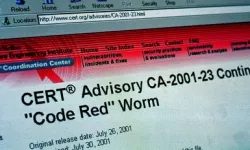
Summer 2001 brought two distinct threats: the original Code Red and its sequel, Code Red II. Both targeted the same flaw. Specifically, they exploited a buffer overflow vulnerability in Windows 2000 and Windows NT systems. When these machines received more data than their buffers could handle, adjacent memory got overwritten. The result was a crash or, worse, a takeover.
The White House Attack and System Compromise
The first worm had a clear agenda. It launched a distributed denial of service (DDoS) attack against the White House’s web servers. Infected computers across the globe simultaneously pinged the same target. The goal was simple: overload the machines until they stopped responding.
Code Red II was different. It didn’t just crash systems. It created a backdoor into the operating system. This allowed remote users to access and control the compromised machine. In technical terms, this is a system-level compromise. The owner loses all authority over their own hardware.
The implications are severe. An attacker can access personal information or use the infected computer to commit crimes. The victim doesn’t just face a broken PC. They also risk falling under police suspicion for crimes they didn’t commit.
Windows NT vs. Windows 2000
Not all machines suffered equally. Windows NT systems were indeed vulnerable. However, the impact was less extreme. Web servers running Windows NT might crash more frequently than normal. But that was largely the extent of the damage. Compared to the total loss of control experienced by Windows 2000 users, NT users got off relatively easy.
The Patch Dilemma
Microsoft released patches to fix the underlying security hole in both operating systems. Once patched, the original worms could no longer infect new Windows 2000 machines. But there was a catch. The patch did not remove existing viruses. Victims had to clean their systems themselves.
What to Do When Infected
Finding out your computer is infected is stressful. The right response depends on the specific malware. Many antivirus programs can remove viruses from an infected system. But if the virus has corrupted files or data, you need to restore from backups.
This is why regular backups are non-negotiable. For worms like Code Red, a simple cleanup isn’t enough. It’s advisable to completely reformat the hard drive and start fresh. Some worms allow other malicious software to load onto your machine. A standard antivirus sweep might miss those secondary threats.
6: Nimda
The Nimda Worm: Speed and Severity
If you were watching the server logs in 2001, Nimda likely caught you off guard. The name wasn’t random. It’s “admin” spelled backward, a subtle dig at the system privileges the worm sought to exploit. According to Peter Tippett, then-CTO of TruSecure, Nimda hit the internet and clawed its way to the top of reported attacks in just 22 minutes. That is not a typo. Twenty-two minutes to become the fastest-propagating computer virus of its era.
Most malware wants your personal data. Nimda wanted bandwidth.
Its primary targets were internet servers. While a home PC could get infected, the worm’s real goal was to choke traffic. It turned infected machines into zombie nodes, effectively executing a distributed denial-of-service (DDoS) attack by sheer volume. The worm was a hydra with multiple heads. It spread through email attachments, vulnerable web servers, and shared network drives. This multi-vector approach meant it didn’t just knock on one door; it smashed every window in the building.
Once inside, Nimda carved out a backdoor into the operating system. The level of access it granted depended entirely on the user who triggered it. If a standard user with limited privileges clicked the wrong file, the attacker got limited access. If an administrator was logged in, the attacker took the wheel. Full control. Remote execution. The worm ate system resources until network systems crashed under the weight.
Beyond the PC: Portable Threats
Not all malware lives on your desktop. Some target the devices you carry in your pocket or bag.
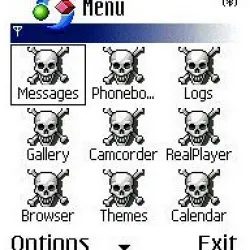
By the mid-2000s, the threat landscape shifted toward portability. CommWarrior targeted smartphones running the Symbian operating system, spreading via Bluetooth and MMS. It didn’t just copy itself; it logged user data and deleted files. Another Symbian threat, the Skulls Virus, was more visual than destructive. It replaced the phone’s home screen with an image of skulls, turning a communication device into a digital billboard for horror.
Storage devices became vectors too. RavMonE.exe infected iPod MP3 players produced between September 12, 2006, and October 18, 2006. The virus hid in the music files, waiting to jump to a computer when synced. This wasn’t theoretical. Fox News reported in March 2008 that some electronic gadgets left the factory with viruses pre-installed. You didn’t need to download anything. You just needed to plug the device into your machine and sync.
The line between hardware and software vulnerability blurred. A cheap gadget could be a Trojan horse.
SQL Slammer and the Sapphire Wave
The next major wave of destruction targeted the backbone of data infrastructure. SQL Slammer, also known as Sapphire, didn’t rely on user interaction. It didn’t need you to click an email or insert a compromised iPod.
It exploited a buffer overflow vulnerability in Microsoft SQL Server. Specifically, it targeted versions 7.0 and 2000 that hadn’t applied the latest security patches. The worm was tiny. Only 370 bytes. This small size allowed it to fit into a single UDP packet, making it incredibly efficient at propagation.
Once it found a vulnerable server, it scanned random IP addresses in bursts. The speed was terrifying. The worm spread so rapidly that it overwhelmed network infrastructure before many administrators could even identify the threat. Major networks crumbled. Airline computers went dark. Bank ATMs stopped processing transactions. The internet itself slowed to a crawl.
SQL Slammer demonstrated

It was late January 2003. The internet felt fragile. A new web server virus tore through the network, exploiting a fundamental lack of preparation. The results were immediate and chaotic. Bank of America’s ATM network went dark. Seattle’s 911 emergency service experienced significant outages. Continental Airlines grounded flights because their electronic ticketing and check-in systems failed.
The cause? SQL Slammer, also known as Sapphire.
The damage estimate exceeded $1 billion. That number is staggering for 2003. The attack’s velocity was the real horror. Within minutes of hitting its first server, the virus doubled its infected hosts every few seconds. By the fifteen-minute mark, it had compromised nearly half of the internet’s critical server infrastructure. It was a race against time that the internet barely survived.
Why SQL Slammer Changed Security Paradigms
The lesson from Slammer wasn’t just about vulnerability. It was about response time. You cannot rely solely on having the latest patches or antivirus signatures. Hackers hunt for unknown weaknesses—zero-days that haven’t been disclosed yet. While patching remains essential, the Slammer attack proved that you need a disaster recovery plan. You need to survive the moment before the fix arrives.
This shift in mindset highlighted the importance of resilience over pure prevention. The vulnerability itself was less important than how fast it spread.
A Matter of Timing: The Rise of Time-Triggered Malware
Not all viruses strike immediately. Some are programmed to sleep. They wait. They sit dormant on a victim’s machine until a specific date triggers their payload. This tactic added a layer of psychological warfare to cyberattacks. You never knew when the clock would run out.
History offers a grim catalog of these time-based threats:
- The Jerusalem virus: Activated every Friday the 13th, corrupting data on the hard drive.
- The Michelangelo virus: Triggered on March 6, 1992, marking the birthday of the Italian artist (born March 6, 1475).
- The Chernobyl virus: Launched on April 26, 1999, the 13th anniversary of the nuclear disaster.
- The Nyxem virus: Stripped files from infected computers on the third of every month.
These examples show that malware can be patient. It can wait for you to lower your guard. The feeling of helplessness this creates is potent. You are vulnerable. You are despondent.
This emotional landscape sets the stage for the next major threat. A virus with a name that perfectly encapsulated those feelings.
4: MyDoom

MyDoom, also known as Novarg, didn’t just infect machines. It installed a backdoor. This gave attackers persistent access to the operating system long after the initial infection. The original strain had a brutal schedule. Two specific triggers dictated its behavior.
The first trigger launched a denial-of-service (DoS) attack against SCO Group servers on February 1, 2004. The second command stopped the worm from spreading on February 12, 2004. Even though the distribution halted, the backdoors stayed open. Victims remained vulnerable to remote control.
The Search Engine Attack
Later in 2004, MyDoom struck again. This time, it targeted search engine companies. The worm scanned local hard drives for email addresses. It then used those addresses to populate search queries. It sent these requests to search engines like Google.
The result was chaos. Corrupted computers flooded Google with millions of automated search requests. The sheer volume of traffic slowed down services. In some cases, it caused crashes. This was not a typical virus behavior. It turned user devices into weapons against infrastructure.
Stealth and Scale
MyDoom moved through email and peer-to-peer networks. Security firm MessageLabs reported that one in every twelve emails carried the worm at its peak. The worm spoofed sender addresses. This made tracking the origin nearly impossible. It mirrored the tactics of the Klez virus. Spoofing created confusion and slowed response times.
Oddball Viruses and Harmless Tricks
Not every threat destroys data. Some viruses just make computers act weird. The Ping-Pong virus created a bouncing ball graphic. It did no real damage. It was a visual nuisance, not a destructive force.
Many “viruses” are actually joke programs. They mimic infection symptoms but do not self-replicate. They might freeze the screen or show strange pop-ups. These are harmless applications. If you suspect an infection, let antivirus software handle it. Do not assume all strange behavior is a virus.
The Sasser and Netsky Connection
The next chapter involves two specific threats. They share a common creator. The Sasser worm and the Netsky virus emerged from the same hacker. Their impact was distinct but equally significant in the evolution of malware.

Virus writers usually stay in the shadows. They craft their code, release it, and vanish into the digital ether. But occasionally, the trail gets cold for no one but the authorities. The Sasser and Netsky worms are proof that you can’t always hide in plain sight. Security experts traced both back to a single source: a 17-year-old German named Sven Jaschan.
The code told the story. The worms acted differently, sure. But the fingerprints in the source code were identical. Same logic. Same quirks. Same hands.
The Sasser Worm’s Brutal Simplicity
Sasser didn’t bother with social engineering. It didn’t need you to click a link or open a weird attachment. It found its victims by force.
The worm exploited a vulnerability in Microsoft Windows. Specifically, it targeted the LSASS service. Once inside, it went to work. It scanned random IP addresses, hunting for other vulnerable machines. When it found one, it didn’t send an email. It connected directly and instructed the new host to download the worm.
Then came the twist. Sasser altered the victim’s operating system. It disabled the ability to shut down or restart the computer through normal channels. The only way to stop the chaos was to hard-reset the machine. Pull the plug. It was a denial of service attack built into the very fabric of the infected OS.
Netsky’s Email Spam Engine
Netsky played a different game. It moved through email and Windows networks. It spoofed email addresses to make messages look legitimate. The payload? A file attachment exactly 22,016 bytes in size.
As Netsky spread, it clogged networks. Systems collapsed under the weight of the traffic. It effectively launched a distributed denial-of-service (DoS) attack as machines struggled to process the deluge.
At its peak, security researchers at Sophos estimated that Netsky and its variants made up 25 percent of all computer viruses on the internet. That’s not just noise. That’s a flood.
The Verdict
Jaschan faced serious charges. But his age changed everything. Because he was under 18 when arrested, German courts didn’t try him as an adult. He avoided jail time. Instead, he got one year and nine months of probation.
It’s a lenient sentence for the damage caused. But it highlights a gap in how we handle juvenile cybercrime. The code was mature. The criminal was a kid.
Macs Aren’t Safe
We’ve spent the last few sections talking about Windows. It’s the big target. The most common OS. But assuming Macintosh computers are immune is a dangerous mistake.
They aren’t.
The next section reveals the first virus to specifically target Mac systems. It wasn’t just a port. It was a unique attack.
2: Leap-A/Oompa-A
Black Hats and White Hats
Hacking isn’t just about code. It’s about intent.
In the tech world, we borrow from fantasy. Good witches and bad witches in Oz. Good hackers and bad hackers in reality. The term for the malicious actor is a black hat.
These are the people who create viruses. They find vulnerabilities not to fix them, but to exploit them. They commit crimes. They compromise systems for profit, chaos, or attention.
Some of them attend conferences. The Black Hat conference. Defcon. They gather to discuss their craft. They talk about how they bypassed security. How they used a zero-day exploit. They don’t hide it completely. They wear their identity like a badge.
It’s a stark contrast to the white hats. The

“The Leap-A virus doesn’t cause much harm to computers, but it does show that even a Mac computer can fall prey to malicious software.”
For years, the prevailing wisdom in tech circles was that Apple’s walled garden was safe. Justin Long in those famous ads wasn’t just selling cool aesthetics; he was selling the idea of security through obscurity. Because Macs held a smaller slice of the home market than PCs, hackers had less incentive to waste time building payloads for them. The logic was coldly efficient: why aim for ten thousand victims when you can aim for ten million? Apple’s vertical integration—making both the hardware and the OS—meant the operating system remained relatively opaque to the outside world. It wasn’t perfect security, but it was enough to keep most malware at bay.
Then came 2006.
The Leap-A virus (also known as Oompa-A) didn’t care about market share. It exploited iChat, the instant messaging app, to spread. It didn’t need to hack the kernel. It just needed you to click a file that looked like a harmless JPEG but was actually a corrupted executable. Once inside, it scanned your contacts list and sent itself along to your friends. It was messy. It was annoying. But it proved the point: if enough people use Macs, hackers will come.
Now, the conversation has shifted. We are looking at the top spot on the list of significant computer threats, and it isn’t a Trojan horse hiding in a pirated movie download. It is the Storm Worm, also known as Niur or Vobfus.
What is the Storm Worm?
The Storm Worm emerged in early 2007, riding a wave of panic about the Y2K bug and other high-profile tech fears. It arrived via email with a subject line designed to trigger immediate anxiety. The content was vague, often referencing security issues or political scandals, but the attachment was the real bait. The file name might have been storm.exe or something similarly generic, but clicking it opened the floodgates.
This wasn’t just a virus in the traditional sense. It was a worm. It spread automatically. It didn’t wait for user interaction after the initial click. It used peer-to-peer (P2P) networks to propagate, meaning it didn’t rely solely on email servers to move from machine to machine. This made it incredibly difficult to stop. You couldn’t just block an IP address or patch a server. You had to hunt down individual infected nodes.
How the Storm Worm Worked
The Storm Worm was sophisticated for its time. It created multiple copies of itself in different locations on your hard drive, making removal nearly impossible without specialized tools. It opened ports on your computer, turning your machine into a bot—a zombie soldier in a larger army.
This leads to the most common question users have about this era of malware: why was the Storm Worm so damaging if it didn’t destroy files?
The answer lies in the botnet. A botnet is a network of compromised computers controlled by a hacker. The Storm Worm turned your PC into a node in this network. Hackers could then use your machine to send out millions of spam emails, attack other websites with Distributed Denial of Service (DDoS) attacks, or mine cryptocurrency (though crypto-mining wasn’t as prevalent then as it is now). The damage wasn’t to your data. The damage was to your bandwidth, your reputation, and your contribution to someone else’s criminal enterprise.
The Shift in Malware Tactics
The Storm Worm marked a turning point. Before this, viruses were often about curiosity or vandalism. After this, malware became about infrastructure. It was about building a machine that could be rented out for malicious purposes. The **Storm Worm

It arrived in late 2006. Security researchers spotted it then, but the public named it later. The moniker came from an email subject line: “230 dead as storm batters Europe.” People remembered the tragedy. They clicked the link. They got the worm.
Antivirus labs had their own names for it. Symantec labeled it Peacomm. McAfee called it Nuwar. The confusion is understandable. There was already a W32.Storm.Worm from 2001. That one is a different beast entirely. Don’t mix them up.
The 2006 variant is a Trojan horse. Its job is to deliver a payload. That payload changes. Sometimes it’s a keylogger. Sometimes it’s something else. The goal is consistent though. It turns your machine into a zombie.
Zombies are bots. They sit there. They wait for commands. A hacker in a dark room sends a signal. The bot responds. Thousands of these bots form a network. That’s a botnet.
These botnets are useful for spam. They pump millions of junk emails into the internet. The Storm Worm helped build that infrastructure. It grew the army.
How did it get in? Fake news. That was the trick. The worm creators changed their tactics constantly. They rode the wave of current events.
Look at the 2008 Beijing Olympics. A new version emerged. The email subject read: “A new deadly catastrophe in China” or “China’s most deadly earthquake.” It felt urgent. It felt real. The link promised video footage. News stories. Instead, it downloaded the worm.
The scale was massive. By July 2007, Postini reported something staggering. They saw over 200 million emails carrying links to the worm. That was just their detection system. It spanned several days. The attack was global.
Did everyone get infected? No. Not every click led to a download. But enough did. Major news outlets and tech blogs ranked it among the worst attacks of the decade. It was everywhere.
Is it hard to remove today? Actually, no. The Storm Worm isn’t the most sophisticated malware out there. If you keep your antivirus updated, it’s manageable. The real defense is caution. Be skeptical of emails from unknown senders. Hover over links. Check the URL.
It’s not just about viruses. The term “malware” covers more ground. Spyware is one type. It watches you. It logs keystrokes. It steals passwords. It sits in the background while you type your bank login.
Adware is another category. It displays ads. It rides along with larger applications like web browsers. Some versions are harmless. Others dig deeper. They give advertisers access to private data. Your browsing habits. Your interests. Sold to the highest bidder.
More on Security
The landscape of threats is always shifting. New variants appear. Old ones get updated. The Storm Worm was a lesson in social engineering. It proved that fear and curiosity are easier to exploit than technical vulnerabilities.
Remember the 2001 Storm Worm? It’s gone. But the tactics remain. The headlines change. The danger is the same. Keep your software current. Stay skeptical. The internet is vast, and not everything that looks like news is actually news.