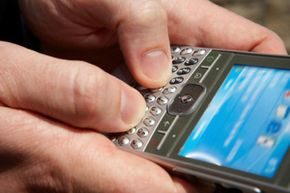
We are stuck in a weird lull. Everyone used to be glued to their screens, talking into the receiver. Now? Silence. Just thumbs flying across tiny numerical pads. It feels like we’ve regressed to Morse code, only faster. But before you write off text messaging as a relic of the early 2000s, you need to understand the infrastructure holding it up. It isn’t just “typing.” It is a complex dance between your device, a cell tower, and a backend server. If you want to know why your message sometimes lags or why SMS remains the backbone of global communication, we need to look under the hood.
The Control Channel
Short Message Service (SMS) is not magic. It is a method of transmitting text between mobile devices, or from a computer to a mobile device. The mechanics are surprisingly simple, provided you understand the control channel.
Even when your phone is idle, it is screaming into the void. It is constantly sending and receiving data to stay connected to the nearest cell tower. This chatter happens over a dedicated pathway called the control channel. The network needs this constant feedback loop to know which specific cell sector your phone is sitting in. As you move, the system hands your connection off from one tower to the next. It also exchanges small data packets to confirm that the link is still alive and everything is functioning correctly.
This channel is the lifeline for more than just movement tracking. When someone calls you, the tower uses the control channel to ping your device. It triggers the ringtone and assigns a pair of voice channel frequencies for the actual conversation. But it also carries SMS data.
The Journey of a Text
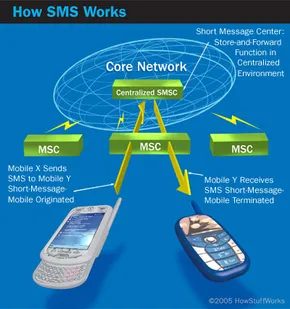
When a friend sends you a text, the message does not go straight to your phone. It hits the Short Message Service Center (SMSC) first. From there, the SMSC routes the data to your local cell tower. The tower then packages the text into a small data packet and sends it across the control channel to your device.
The reverse process is identical. You type a message. Your phone pushes it to the tower via the control channel. The tower forwards it to the SMSC. The SMSC then routes it to the recipient’s tower, which finally pushes it to their phone.
The data packet itself is dense with metadata. It contains the length of the message, a timestamp, the destination number, and formatting instructions. If you dig into the byte-by-byte structure, you will see a rigid protocol designed for efficiency over speed.
Network Vulnerabilities and Mitigation
The simplicity of the control channel is also its weakness. Security researchers have long pointed out that SMS could be weaponized. The concept is straightforward: flood a small geographic area with thousands of automated texts sent by computers. These messages would clog the control channel.
When the channel is jammed, the system cannot handle call setup requests. You cannot make or receive calls. The network grinds to a halt. Cell providers are aware of this vulnerability. Modern SMSC designs include throttling mechanisms to limit the flow of messages onto the network, preventing a single source from overwhelming the infrastructure.
Why SMS Survives
Despite the rise of data-heavy apps, SMS persists. It works on basic hardware. It works when data networks are congested or unavailable. It requires no app installation. It is the universal standard. But it is also slow by design. The reliance on the control channel, which prioritizes call setup and network stability over data throughput, explains why your text sometimes takes an extra second to arrive. It is not a bug. It is a feature of a system designed to keep voice calls reliable above all else.
We are still typing. The hardware is changing. The networks are getting faster. But the core mechanism remains stubbornly simple. And that is probably why it will never go away.
Why Texting Fits Into Your Pocket (and Why It Works)
You don’t need to be a network engineer to see why text messaging stuck. It is discreet. You can send a quick update in a meeting without holding a phone to your ear. It is faster than writing an email or waiting for someone to answer a call. The friction is low.
But the real magic is in how the message moves. SMS is a store-and-forward service. That sounds technical, but the effect is simple. When you send a text, it doesn’t go straight to the recipient’s phone. It sits in a queue at the SMSC (Short Message Service Center). The recipient’s device doesn’t even need to be on. It doesn’t need signal. It just needs to exist.
Once that phone turns on or moves into range, the message is delivered. If the user never turns it on, the message waits. It stays on the SIM card until deleted. This reliability is why the format survived when flashier technologies came and went.
The Broadcasting Boom
Beyond one-on-one chats, SMS became a broadcast tool. Companies didn’t just use it for internal memos. They used it for mass alerts. News services distribute headlines this way. Online services push updates to subscribers. It is efficient because it doesn’t clog the voice channels.
The network impact is minimal. Phone calls consume significant bandwidth. Texts do not. This opened the door for interactive campaigns. TV shows used SMS for voting. Viewers texted in their choices for reality contestants. Wireless carriers set up giant screens at concerts. They displayed audience texts in real time. The feedback loop was immediate.
How Users Actually Behaved
People didn’t all adopt SMS the same way. A 2004 University of Plymouth study broke mobile users into two camps: texters and talkers.
The data was stark. Texters sent nearly double the number of SMS messages compared to talkers. Meanwhile, they made less than half as many voice calls. Why? Convenience. And control. You can review a text before hitting send. You can edit. You can pause. Voice calls demand immediate attention. Texts do not.
Integrating SMS Into Daily Life
Developers realized SMS could do more than just chat. Subscription services started pushing medication reminders directly to phones. Weather alerts came through the same channel. News headlines arrived in bursts. Even literature found a way in, with novels broken into 160-character chapters.
Search engines got in on the action. Yahoo and Google offered short messaging services. Users could text queries to a number. They got driving directions. They got movie showtimes. They got local business listings. No browser needed. Just a text.
Location-based services like Dodgeball used SMS for social discovery. The service alerted users in big cities when friends—or crushes—were nearby. The integration was seamless for the user, even if the backend logic was complex. The possibilities felt endless.
Where SMS Came From
SMS wasn’t an accident. It was built in the late 1980s. It was designed to work with GSM (Global System for Mobile Communications). This digital standard became the backbone of most modern cell phones. Norwegian engineers wanted a simple system. They wanted it to work even when phones were off. They wanted it to work out of signal range.
The first SMS message went out in the UK in 1992. From there, it spread.
The Transatlantic Gap
Europe embraced SMS quickly. The United States lagged. The culture of voice calls was stronger here. It took time for the habit to shift.
Even today, texting is more popular in Europe. But the gap is closing. A July 2005 study found that 37 percent of U.S. mobile phone owners had sent or received at least one text message in the previous month. The adoption curve was climbing. The infrastructure was ready. The question was no longer if people would text. It was how much they would text.
Next, we look at the limitations of SMS and what came next.
The Hidden Costs and Delivery Delays of Basic Texting
Most people assume texting is a free service included in their plan. It isn’t. Wireless carriers charge for every message, whether you send it or receive it. Even with monthly bundles, exceeding your cap hits you with a steep fee. We’re talking about ten cents per message. That sounds small until you’re sending dozens of replies during a busy week. The bill adds up fast.
There’s also the issue of speed. SMS is not instant. When network traffic spikes, your message might sit in a queue for minutes or even hours before it actually lands on the recipient’s phone. It’s not real-time communication. It’s store-and-forward. And it only handles text. No images. No video. No audio. If you need to share a photo of the damage from the car accident, SMS can’t do that.
Stepping Up to MMS and EMS
If you need more than plain text, you have to upgrade to Enhanced Messaging Service (EMS) or Multimedia Messaging Service (MMS).
EMS lets you add basic formatting, sound effects, small icons, and tiny pictures to your text. It’s a slight upgrade, but limited. MMS is the real shift. It allows you to send animations, full audio files, and video clips alongside your text. If your phone and carrier support these standards, the interface looks similar to SMS. The catch? The cost per message is significantly higher. You are paying for data and media handling, not just simple character codes.
Instant Messaging via WAP
Another route is skipping the carrier’s SMS infrastructure entirely and using instant messaging (IM) on your cell phone. This could be pre-installed software or a web-based solution.
For phones without full internet browsers, you might use WAP (Wireless Application Protocol). WAP serves up simplified, lightweight versions of web pages designed for small screens. It’s clunky by today’s standards, but it allows you to navigate the internet and log into IM accounts or check email directly from your device. You aren’t sending texts through the cellular network’s message center. You’re using data protocols. This can be faster and often cheaper if you have a data plan, but it requires a different setup than a standard text.
Why SMS Fails Under Pressure
The core complaint about SMS isn’t just cost. It’s the inefficient delivery structure. Messages go through a central message center. When that center gets backed up due to high traffic, your message stalls. It doesn’t just delay. It hangs in limbo.
To fix this, networks have moved toward next-generation technologies like GPRS (General Packet Radio Service). GPRS handles data more efficiently than the circuit-switched network SMS relies on. It allows for faster, more reliable delivery by treating data packets differently. It’s a necessary evolution because the old SMS protocol simply can’t handle the volume or speed requirements of modern communication.
The Social and Political Weight of Texting
SMS is impersonal. That simplicity creates ethical gray areas. People have sued after being fired or notified of divorce proceedings via text. The law struggles with this because a text message lacks the gravity of a face-to-face conversation.
On a larger scale, SMS has become a tool for mobilization. In Beijing, broadcast texts were used to rally political activists. In Belfast, similar methods helped mobilize youth for riots. The efficiency of SMS makes it a powerful weapon for organizing. It recently even lost a contest to Morse code for raw speed efficiency, but its ubiquity makes it far more dangerous in the wrong hands.
How SMS and MMS Actually Work
What does SMS stand for?
Short Message Service. Developed in the early 1980s and standardized as GSM in 1985, it remains the most widely used texting technology globally.
Can you send pictures with SMS?
No. SMS is strictly for numbers, letters, and symbols. It is a character-based protocol. If you try to send a picture, it will fail or require conversion to an incompatible format.
What are the main downsides?
You pay for it. Exceeding limits costs extra. It’s not instant during traffic spikes. And it lacks media support. These limitations are why we moved past it.
What is MMS?
Multimedia Messaging Service. It’s the successor to SMS that handles GIFs, audio, video, and images. The cost varies by provider and data usage, but it’s generally higher than plain SMS. It’s the standard for sharing visual content on mobile networks today.