For many of us, a watch is as common as a pair of shoes. It’s a non-negotiable item of everyday clothing. But this assumption is historically uncertain. The idea that watches are a timeless staple is a misconception. In fact, the wristwatch has dominated modern culture for less than a century.
Some observers predict its imminent demise. They argue that advancing technology is pushing mechanical watches into obscurity. Why wear a watch when the smartphone in your pocket offers the precision of an atomic clock? Is the analog clock just a passing phase? Will it join the ranks of eight-track tapes and payphones as a historical curiosity?
Or will manufacturers adapt to keep the watch relevant? The answer likely lies in the changing reasons why we wear watches. The motives of the 20th century may not apply to today’s consumers. To understand the future, we must first understand how the watch got its place on the wrist.
It’s about time
Time is a constant source of stress. We feel pressure to be on time. The phrase “time is money” is a cliché for a reason.
However, until the 18th century, most people were not obsessed with time. Human history has been determined by natural cycles. The position of the sun determined daily actions. The seasons shaped the calendar. When congregations needed coordination, such as during church services, public clocks and bells gave the signal. The pressure on individuals to follow the minutes and seconds accurately was low.
Society’s relationship with time changed during the Renaissance and Enlightenment. The industrial revolution accelerated this change. Work moved from farms to factories. Workers had to arrive at certain times. The expansion of public transport led to strict timetables and schedules that had to be adhered to.
Time became personal, but science had to catch up to make it available.
Early timing devices were impractical. Sundials, water clocks and hourglasses were limited by weather and maintenance. Mechanical clocks with weights and levers were big. Pendulum clocks developed in the 17th century improved accuracy, but remained too heavy to carry.
The invention of coil springs changed everything. These springs allowed watchmakers to make the mechanisms smaller. Early clocks only showed hours. They were large, heavy, and often worn as belt buckles or pendants. Pocket watches eventually became the standard for portable timekeeping.
Mass production techniques during the industrial revolution lowered costs. Interchangeable parts made watches affordable for ordinary people. At the same time, luxury brands began to make a name for themselves for quality craftsmanship. But the form factor remained the pocket.
Fashion and war
The transition from pocket to wrist was not immediate. It required a combination of military necessity and changing social norms. Soldiers needed hands-free access during combat. This practical requirement led to early adoption by military personnel.
Civilians were initially suspicious of wristwatches. They were often considered masculine or useful objects. Fashion trends played a significant role in their acceptance. As women’s fashion evolved, smaller, more delicate wristwatches became more and more popular. The stigma associated with wristwatches began to fade.
The First World War cemented the wristwatch’s place in mainstream culture. Soldiers relied on them for coordination and timing. The veterans returned home with the watches they were used to. This created a new demand among the general public. The wristwatch changed from a special tool to an everyday accessory.
Manufacturers responded by developing watches that were both durable and stylish. The focus shifted from mere functionality to aesthetics. The wristwatch became a symbol of status and sophistication. It was no longer just a time measuring device. It was a statement of identity.
The journey from the pocket to wrist was not linear. It was about technological innovations, social changes and practical needs. The wristwatch survived because it adapted. It met the needs of its users. As we look to the future, the question remains: will the watch continue to evolve or succumb to the next wave of technological change? History suggests it has the resilience to do both.
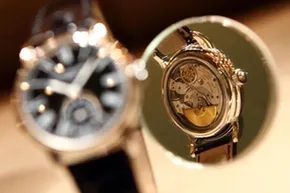
The story of the wristwatch didn’t start as a tool for men. It began as an ornament. In 1790, Swiss watchmakers Pierre Jaquet-Droz and Jean-Frédéric Leschot attached a timepiece to a woman’s bracelet. It was elegant. It was impractical. It didn’t catch on.
Then came Patek Philippe. In 1868, they produced what is widely considered the first true wristwatch. These weren’t for laborers or soldiers. They were for wealthy women. Called “wristlets,” they were jewelry first, timepieces second. Mass production in the late 19th century made these cheaper, and women embraced them.
Men? They stuck to pocket watches. Wristwatches were seen as ladylike. They got in the way. Or so the logic went.
The War That Changed Everything
Technology and conflict dismantled that stigma. During the late 19th century, soldiers and sailors struggled with pocket watches. Carrying them at sea was dangerous. Using them on the battlefield was slow. Improvised leather straps appeared, holding pocket watches to wrists.
The German Imperial Navy used these in the 1880s. British soldiers in the Anglo-Boer War (around 1900) relied on them to coordinate troops. Precise timing meant victory.
Aviation accelerated the shift. Albert Santos Dumont, a Brazilian aviation pioneer, complained to his friend, watchmaker Louis Cartier. Pocket watches were useless in the cockpit. You can’t fumble with a pocket watch while flying a plane. In 1904, Cartier delivered a solution: a man’s watch with a leather strap and buckle. It was functional. It was masculine. It was the future.
World War I cemented it. Soldiers needed their hands free for rifles, maps, and machinery. They couldn’t reach into a pocket to check the time. Wristwatches became mandatory. By the mid-20th century, pocket watches were relics. Wristwatches were official.
Left Wrist, Right Hand
You might wonder why watches are worn on the left wrist. It’s not arbitrary. It’s ergonomic. Most people are right-handed. Winding a watch requires dexterity. You can wind with your right hand while the watch sits on your left wrist. Checking the time? Your right hand keeps working. You don’t have to stop everything to look.
Early handcrafted watches could be worn on either wrist. But as mass adoption hit, the left wrist became the standard. Left-handed people still wear them on their right. But the norm is set.
The Golden Age
The 20th century was the golden era of the wristwatch. Mass production made them affordable. The war made them acceptable for men. By the late 1900s, a watch was essential wardrobe attire.
People owned multiple watches.
– A rugged model for sports.
– A sleek model for business.
– A high-fashion piece for evening wear.
For women, interchangeable bands added versatility. Good watches became status symbols. Graduation gifts. Retirement presents. Men bought fine watches to leave to their children.
Then came the quartz crisis. Electronic watches that never needed winding emerged. Quartz movements drove costs down in the 1970s. Many traditional watchmakers went out of business. Digital watches from Timex and Casio sold for a few dollars. Swatch brought fashion back for under $100. Bulova, Seiko, Citizen, and Fossil offered affordable options starting around $100. Tissot and Lucien Picard sat in the hundreds.
Luxury survived. Rolex remains the most recognized high-end brand. The Rolex Day-Date has been worn by many American presidents. Other luxury names—Omega, Breitling, IWC, Panerai, Zenith, Jaeger LeCoultre, and Vacheron Constantin—sell for thousands.
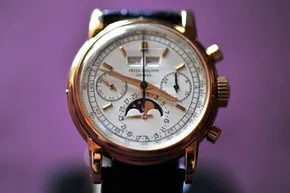
Complicated mechanical watches with moon phases or tiny music boxes can fetch five or six figures. Expensive ladies’ watches decorated with jewels returned to the wristwatch’s origins as ornaments for the wealthy.
The Digital Threat
Early in the 21st century, a new competitor emerged. It wasn’t a watchmaker. It was a phone.
Cell phones promised to replace the wristwatch. Why wear a small screen when you carry a smartphone?
Are we saying goodbye to the wristwatch? Not quite. The answer is more complex. The wristwatch has survived wars, fashion trends, and technological disruptions. It has become something more than a timekeeper. It is a statement. A habit. A piece of personal history.
But the smartphone is changing how we view time. We check our phones constantly. Do we still need a watch on our wrist? Or is it just another piece of jewelry?
The market is shifting. Smartwatches are gaining ground. But mechanical watches remain. Why? Because they are different. They are tangible. They are slow. In a fast digital world, slowness has value.
We are still wearing watches. But we are wearing them for different reasons than before. The timepiece is no longer just about telling time. It is about identity. About control. About standing out in a sea of screens.
The wristwatch is not dead. It is evolving. Again.
Remember when everyone declared watches dead? It seems inevitable. Smartphones are everywhere. Even the cheapest flip phone can tell the time. Why use a special device on your wrist when a pocket-sized device can be more efficient? Sales reflect this sentiment. According to Experian Simmons, purchases of personal watches in the US fell from 55 million in 2004 to 42 million in 2011. The industry is like a dinosaur waiting to be hit by an asteroid.
Then things changed. By early 2012, the obituary was cancelled. Sarcasm? What saved them was the clock threatening technology.
The Social Cost of Checking Time
我们把便利视为理所当然。 但拿出手机来查看时间并不总是合适的。 在商务会议上这是不礼貌的。 在教堂里这是不尊重的行为。 这是课堂上的一种干扰。 手表可以让你巧妙地验证时间。 无需移除设备。 无屏幕眩光。 没有社会惩罚。
然后是物流。 人们丢失手机。 一直以来。 如果了解当前时间对您的一天至关重要,那么手臂上的带子比包里、桌子上或柜台上的设备更可靠。 它总是在那里。
怀旧与风格复兴
Watches weren’t just functional; they became fashionable again. 零售商和制造商宣传手表是一种时尚配饰,而不仅仅是成年人的实用工具。 青少年开始佩戴它们。 为什么? 怀旧之情。 复古魅力。 它们唤起了对年长亲戚或更简单时光的回忆。 在数字世界中,模拟的感觉令人欣慰。
它们成为了收藏品。 高端机械手表因其精湛的工艺而备受推崇。 它们是传家宝。 你把它们传下去。 智能手机每两年更换一次。 一块好的手表可以世代相传。 这种持久性创造了廉价电子产品无法比拟的价值。
Simplicity vs. Smart Features
Two opposing trends keep the market dynamic.
First, as smartphones get more complicated, some people prefer simplicity. There is no need to carry a calendar, calculator or stopwatch on your wrist. They want style. They want jewelry. The wristwatch returned to its roots as an ornamental piece.
Second, watchmakers don’t ignore the competition. They joined it. Smartwatches have arrived. These devices provide GPS. Sync with your phone via Bluetooth. You don’t need to take your device out to receive notifications. You can see at a glance who called you and what kind of message you received.
Rumors of the death of this watch are somewhat exaggerated. It didn’t just survive; It adapted. When technology becomes complex, it brings simplicity. As technology matures, it provides intelligence.
The watch is still on your wrist. The phone is in your pocket. The choice is yours.