French smile, calm capture, tap screen. snap. Send or send now.
It feels like our entire social existence depends on these digital images. But why do we do this? How can we see other people’s pictures? When did this obsession start?
Tobias Schneider from the University of Bamberg points out that the term “selfie” has only been in use for 21 years. The era of high-speed digital selfies really began in 2010. Then the iPhone 4 introduced the front-facing camera. With the simultaneous explosion of social media such as Facebook and Instagram, these images have become an inseparable part of everyday life. We share them with friends, family or the world.
Why do you need to record yourself?
Don’t blame this generation. Long before smartphones and the Internet, people were obsessed with self-expression. Self-portraits have been an integral part of the narrative of photographic art for almost two centuries. The narrative of painting goes back 500 years.
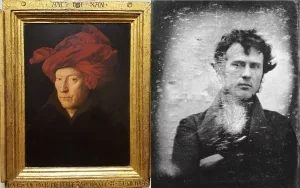
The first official self-portrait is believed to be the Dutch artist Jan van Eyck’s 1433 oil painting Portrait of a Man in a Red Turban. In 1839, American Robert Cornelius took the first selfie with his camera in the backyard of the family business.
At the time, these images were interpreted as expressions of curiosity and creative spirit. Today, people who take selfies are often accused of arrogance and narcissism.
The 2020 study shows that this is not all.
Only 30% of respondents admitted that they take photos because they think they look good or because they want to present themselves. The remaining 70% have other motives. They want to share their experiences. They want to capture memories. Or in some cases it can be part of your job as an influencer or celebrity.
“Selfies are not just for presentation. They are tools for communication and memory.”
The narrative has changed. We don’t just look at ourselves. We look for a way to connect with others through our lens.
The psychology behind the selfie
It’s not just about posting pictures. Sharing information.
Whether it’s a family vacation photo or a mirror check at the gym, the goals are almost always accurate attraction. Intelligence. Feeling random shows that you live a life that your audience doesn’t.
This is rarely calculated consciously. This is muscle memory. Digital body language. But it works.
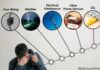
Researchers like Tobias Schneider have recently delved into this exact behavior. They don’t just ask people if they like selfies. They forced more than 100 subjects to look at random pictures and list out five related words. The results are not random. They reveal a consistent framework for how people evaluate self-portraits.
When you look at a stranger’s selfie, you see more than just pixels. You are a member of five different classes of the same time.
1.Aesthetics
First impression. Does the picture look good? Is it very vague? Is there enough light? style? Your brain immediately decides whether an image meets basic standards of visual coherence.
2.Imagination
What happened? What does this person do? It’s not just action. It’s all about reasoning. You fill in the blanks. are they laughing Looking into the distance? You imagine the context because the frame interrupts reality.
3. Character Traits
This is the most important thing. What kind of person is this person? The brain makes personality inferences based on facial expressions, angles, and even messy backgrounds. A small smile can be considered arrogant. Smiling and friendly. Setting up a profile takes less than a second.
4.Emotional state
how do they feel now? happy? melancholy? Forced? This is different from personality. A stable character. Emotions are fluid. You interpret current feelings, not permanent tendencies.
5. theory of mind
This is where things get complicated. What is their motivation? Who do they want to be? You’re trying to interpret the identity they were building in that moment. Why this filter? Why this angle? You are designing their perception of you.
“This shows that we don’t necessarily need words to send very precise messages about ourselves to the outside world.”
The important thing is clear. We think selfies are trivial. it is not. These are high bandwidth communications.
Sending data packets. It includes aesthetic value, inferred context, perceived personality, current feelings, and predicted intentions. You are understood. But this is a deliberate self-definition.
Don’t think of them as one-off images. It’s a business card. Digital vCard entry. You give people your identity and ask them to respond.
The next time you click on a selfie, ask yourself: What exactly am I trying to tell them? Because they’ve already guessed.