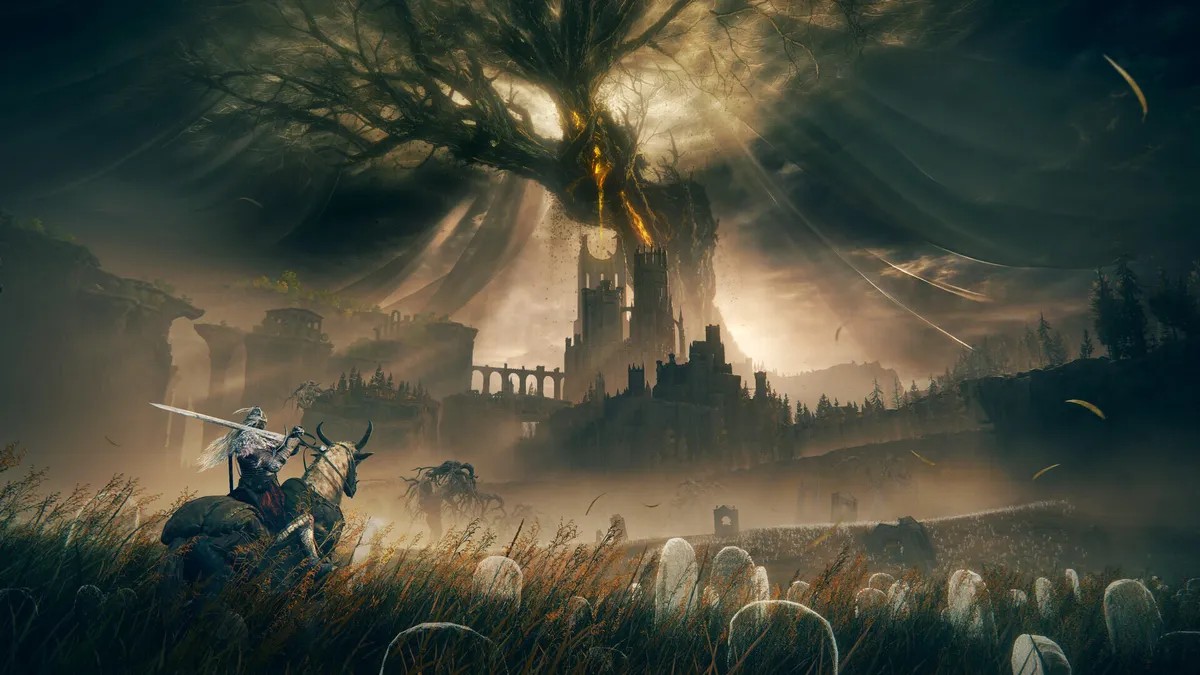
Preorders for Elden Ring: Tarnished Edition have officially opened for the Nintendo Switch 2, but the announcement has done more than just excite fans of FromSoftware—it has ignited a heated debate regarding the future of physical media and consumer rights.
While the package promises a comprehensive experience, the method used to deliver it is raising serious questions about what it actually means to “own” a game in the modern era.
The “Game-Key Card” Controversy
The Switch 2 version of Elden Ring is priced at $80, a premium reflecting the inclusion of the base game and the Shadow of the Erdtree DLC. However, the friction lies in the hardware: the game will be distributed via a “Game-Key Card.”
Because Elden Ring is a massive title—requiring roughly 75GB of storage—fitting the entire game onto a traditional cartridge is prohibitally expensive due to current storage shortages and high manufacturing costs. To solve this, Nintendo is utilizing Game-Key Cards.
How they work:
– The cartridge contains only enough data to validate your purchase via Nintendo’s servers.
– The full game must be downloaded digitally to the console.
– Once downloaded, the game can be played offline without an internet connection.
The Erosion of Physical Ownership
While this is a practical solution for hardware manufacturers, gamers are pushing back against the loss of true physical ownership. The primary concern is that a Game-Key Card is essentially a “physical license” rather than a “physical product.”
This shift highlights a growing trend in the gaming industry: the fragility of digital libraries. If a publisher decides to “delist” a game from digital storefronts, players who rely on these hybrid cards may find themselves unable to reinstall the game on new devices.
This issue has fueled the “Stop Killing Games” movement, a consumer advocacy group currently lobbying for legislative changes in the UK and EU. Their goal is to prevent companies from legally “destroying” games that have already been purchased by making them unplayable or impossible to redownload.
What’s Inside the Tarnished Edition?
Despite the controversy surrounding the delivery method, the content of the Tarnished Edition offers several new incentives for players:
- New Starter Classes: Players can choose between the agile Knight of Idis or the high-defense Heavy Knight. While player stats can be adjusted later, these classes provide unique lore tidbits through their backstories.
- Customization: New armor sets, weapons, and cosmetic options for Torrent, the player’s spectral steed.
- Cross-Platform Availability: Bandai Namco has confirmed that these new features will also be released on other platforms via the “Tarnished Pack” DLC, expected to cost approximately $10.
Pricing and Value
A new pricing trend is also emerging on Nintendo’s platform. Starting this May, Nintendo plans to offer digital versions of games at a $10 discount compared to physical copies. For example, a $70 physical game would be available for $60 digitally.
As of now, the digital price for Elden Ring: Tarnished Edition remains unconfirmed, leaving consumers to weigh the convenience of a digital download against the perceived (yet shrinking) value of a physical cartridge.
Conclusion
The launch of Elden Ring on Switch 2 serves as a flashpoint for the tension between manufacturing efficiency and consumer ownership. As hybrid “Game-Key Cards” become more common, the industry faces a pivotal question: are players buying a permanent piece of media, or merely a temporary permission to play?