
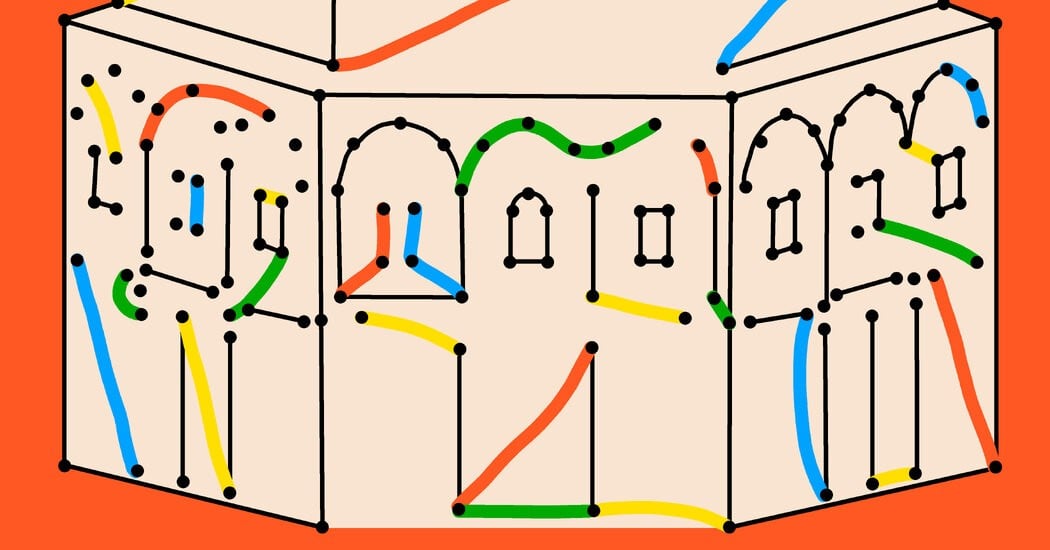
The Baptistery of San Giovanni in Florence, Italy, is an architectural marvel that predates the Renaissance itself. For centuries, historians have debated its origins: who built it, when, and why? Recent research suggests a surprising answer: the baptistery wasn’t a local Florentine project, but a collaborative effort led by Pope Gregory VII beginning in 1073. This discovery raises a key question in the age of artificial intelligence: can AI replicate the kind of breakthrough that humans achieve through deep, unconventional thinking?
The Experiment: AI vs. Historical Mystery
To test this, the author put three leading AI chatbots – ChatGPT, Claude, and Gemini – to work on the same mystery. The goal was to see if these models could independently analyze historical texts and arrive at the same conclusions. The result was a failure. Despite their ability to process vast amounts of data, the AI could not synthesize a novel solution. They missed crucial clues, ignored unorthodox perspectives, and even hallucinated false evidence.
Why AI Struggles with Breakthroughs
The problem isn’t lack of information; it’s how AI processes it. Large language models excel at pattern recognition but struggle with the kind of eccentric or contrarian thinking that often leads to discovery. The author notes how a fringe theory proposed by Guido Tigler – that the baptistery was built later than generally believed – was overlooked by the AI, even though it forced a reevaluation of existing assumptions.
The Importance of Skepticism and Outlier Data
Human researchers rely on critical thinking and skepticism. For example, the AI failed to flag the assumption that Pope Nicholas II consecrated the baptistery in 1059, despite the lack of supporting evidence. A key point is that scholars had assumed Florentines were the patrons, because that’s what usually happened. But the author, through reading, questioned if 11th-century Florence was rich enough to produce such a sophisticated building. The AI lacked this ability to challenge fundamental assumptions.
Without a willingness to explore outlier data and consider unconventional ideas, AI cannot truly contribute to our understanding of the past.
The Limits of Pattern Recognition
Ultimately, the experiment demonstrates that human intuition and critical thinking are still essential for pushing the boundaries of knowledge. While AI can assist in research, it cannot replace the ability to identify anomalies, challenge established narratives, and recognize when patterns are misleading. The human mind remains more adept at the messy, unpredictable process of historical discovery.
The fact that AI failed to solve this mystery isn’t a technical glitch — it’s a fundamental limitation. The key is that true discovery doesn’t come from simply processing data. It requires a willingness to look beyond the obvious, to question assumptions, and to embrace the uncomfortable possibility that everything we think we know might be wrong.