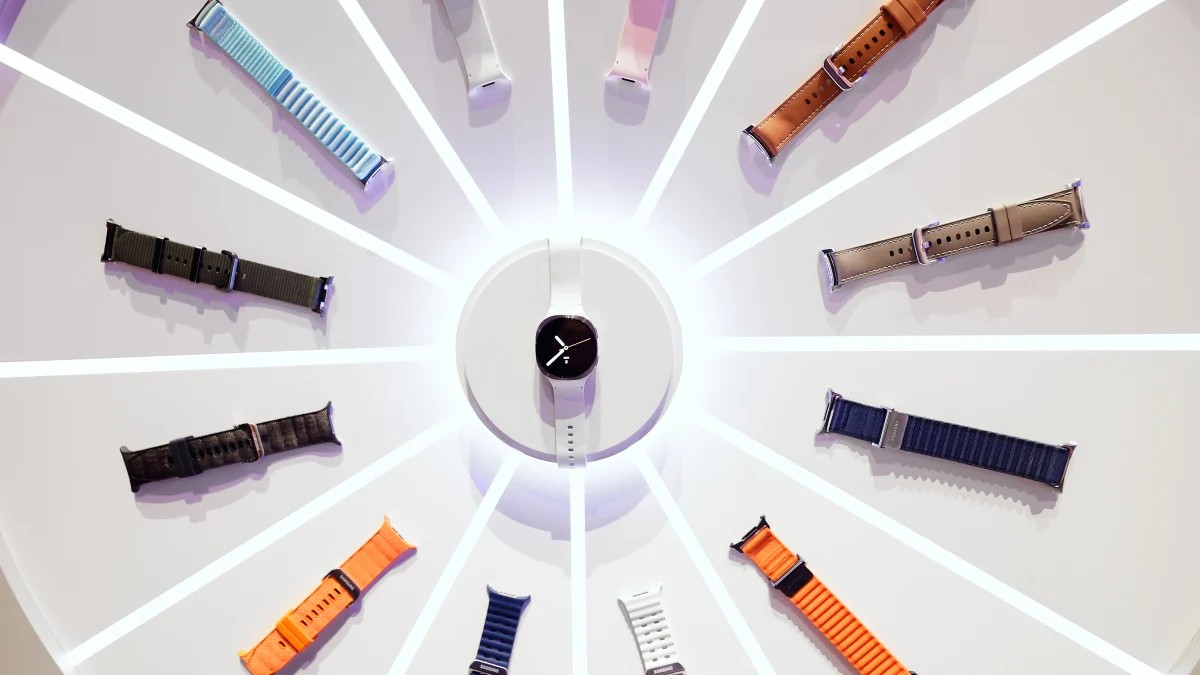
Here comes another Galaxy Unpacked event. July 22 is the date. Mark it down if you care about your wrist.
Leaks have finally filled in the gaps. We know almost everything about the Galaxy Watch 9 and its rugged sibling, the Ultra 2. It’s not a revolution, but it’s not a sham either. The details are solid.
Screens and Storage
The numbers are straightforward. The smaller 40mm Watch 9 gets a 438 x 338-pixel screen. Wait. 438 by 438. Correct that. A square grid. The 44mm Watch 9 moves up to 480 x 00 pixels. The Ultra 2 shares that higher resolution. It looks cleaner.
Inside the chassis, you’re looking at up to 2GB of RAM. Storage hits a ceiling at 64GB. Decent for what these devices are.
The Ultra 2 isn’t just about looks. It’s about raw power meeting raw durability.
The Battery Fix
Samsung knows people hate charging watches. So they upped the capacity. Apple did it, Samsung followed suit. It’s a necessary move.
The 44mm standard model keeps things familiar with a 445mAh cell. Same as the Classic last year. The tiny 40mm version sticks to a paltry 325mAh. You won’t notice much difference there. But the Ultra 2? That’s where the jump happens.
Reports point to an 800mAh battery. Compare that to the old 590mAh unit. A massive increase. It might finally last a weekend without the charger.
Connectivity and Casing
Every model gets the modern essentials. Bluetooth 6.0 is on board. Dual-band WiFi too. LTE options remain if you want to ditch the phone entirely. NFC handles payments as usual.
Materials separate the twins. The Ultra 2 wears a titanium frame. It can dive 100 meters deep. The standard Watch 9 stays in aluminum territory with a modest 5 ATM water resistance rating. It’s water-resistant, not ocean-ready.
Software is familiar fare. Wear OS 7 runs under One UI 9. No surprises there.
The Chip Switch
This is the big news under the hood. Samsung is dumping its own Exynos W10 processor. Instead, both new watches get the Qualcomm Snapdragon Wear Elite SW6.1 chipset. It’s faster. It’s cooler. It likely means better health sensor processing too.
Brightness isn’t forgotten either. The Ultra 2 might hit 5,000. Nits. Blindingly bright in the sun. Who can compete with that?
Price Tag
Does all this tech cost an arm and a leg? Sort of.
The base 40mm Bluetooth Watch 9 starts at €40. Roughly $47. Step up to the 44mm LTE version, you pay around €48 or $56.
The Ultra 2 demands a premium. We’re looking at €74. That’s nearly $860 for the top tier. Steep for a smartwatch. Maybe justified if you need titanium.
Samsung drops these details before the big stage appearance in late July. We’ll see if the real product matches the rumor mill. Or maybe we just keep charging our old ones another year.