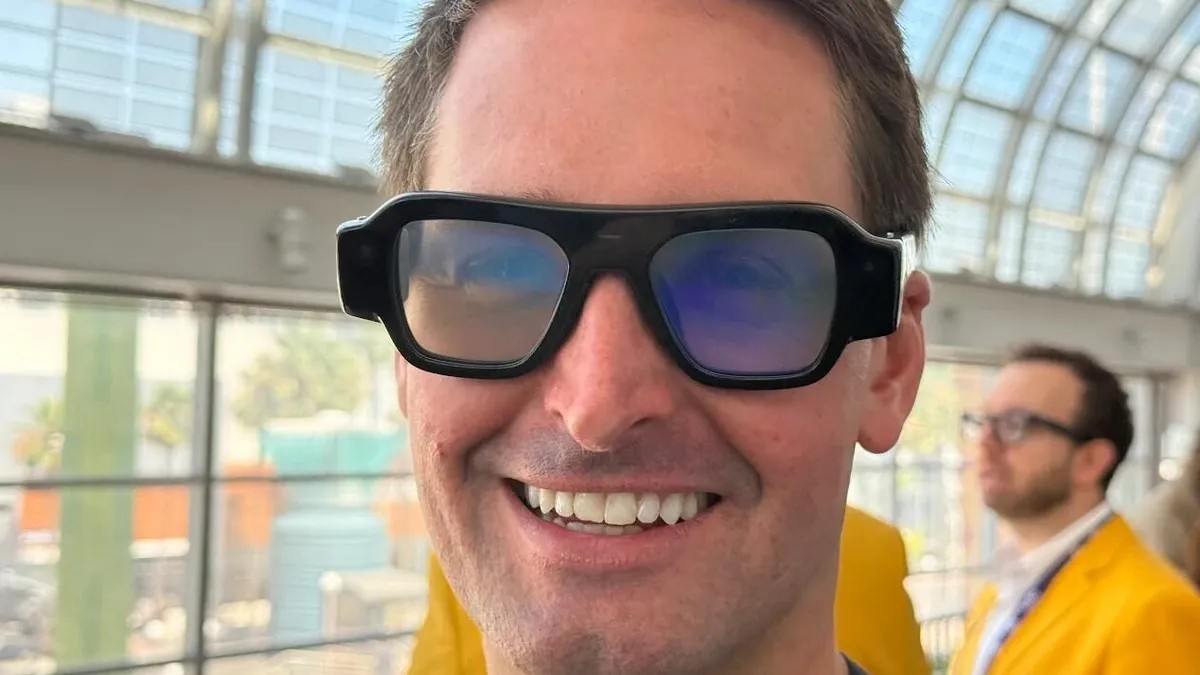
2025 is the year smart glasses finally went mainstream. Snap Specs, Xreal Aura. They look like regular eyewear. Thin enough to ignore. But inside? Fully functional computers.
Last month Meta dropped new, cheaper models. Kylie Jenner helped design one of them. Naturally, people are buying them.
It makes me pause.
Is anyone actually ready for the social fallout? Imagine walking around. Everyone has a lens pointed right at their eyes. My friend reacted with pure disgust when I explained Meta’s Ray-Bans.
“Ew. Why do these exist?” she asked.
I get it. They look chunky. Like old-school black Wayfarers. To the average passerby? Just glasses. You wouldn’t know there’s a hidden camera blinking in the frame.
I’ve run into them twice in public. Both times, my instinct was wrong.
Once on the subway in New York. A guy across the aisle was wearing them. I froze. I felt like I’d stumbled upon some strange urban animal. A raccoon in human skin. I didn’t know if I should act normal or flee. I stayed. I assumed he wasn’t filming me. I was wrong about how I felt—unsettled is the word—but hopefully right about the lens.
Then a guy at a bar. Dim lighting. We started talking. A minute in, I saw it. The telltale hardware.
My stomach dropped.
The privacy rot sets in
Most people still have no idea these things exist. That ignorance is the fuel for this fire.
Some users exploit the gap. They stalk strangers. Film them. The victims? Usually homeless people. Service staff. Women.
In May, a guy in London accosted a woman while wearing the glasses. He recorded the harassment without her consent. Posted it online. 40,000 people watched it. He only agreed to take it down if she paid him.
This isn’t a fringe issue anymore.
Meta sold 7 million pairs in 2025 alone. The barrier to entry is low—starting at $300. Suddenly, “manfluencers” and content creators can buy the ultimate stealth recording device. No consent needed. No body camera light required.
The glasses earn the nickname “pervert glasses” for good reason. Protesters get filmed from hidden angles. Restrooms aren’t safe. And Meta reportedly plans to add facial recognition next.
Can we stop this? Maybe not completely.
But you can make it harder.
You just have to learn what you’re looking at.
Identifying the hardware
Not every pair has a camera.
The Even Realities G2 only has mics and screens. Plug-in displays like Xreal or TCL act as monitors. Viture Beast has a lens but is strictly for augmented reality fun.
But the cameras are here. And for now, Meta makes almost all of them.
“Each pair of smart glasses has its one type of indicator… We don’t have a clearmental map of what tolook for.”
— Scott Stein, CNET
So look for the light.
Meta Ray-Bans—originally launched in 2021 as “Stories”—have a specific setup. The latest models have a tiny screen inside the lens (invisible to outsiders) but the external hardware remains distinct.
Thick plastic frames. A camera lens sits in the upper corner. Upper-left if you’re facing them. Upper-right if you’re wearing them.
On the opposite corner? An LED indicator.
Here’s how it works.
– Take a photo? The light flashes once.
– Recording video? It pulses.
Press the button on the right temple. Or just say “Hey Meta, take a photo.”
The light turns on automatically. That’s your cue.
But the clues are subtle. Sometimes there’s a shutter sound. A quiet snap. Other times, nothing.
Sunlight kills the LED. Direct sun makes the indicator invisible. And tech-savvy users? They peel off the LEDs. Cover them with stickers. Hack the frames. (Meta recently updated the software to disable cameras if the light is tampered with, but the game of cat-and-mouse continues).
Then there are the Oakleys. The HSTN looks like round Ray-Bans with the same camera/light setup. The Vanguard wraps around your head like goggles. The lens is right on the bridge of the nose.
Amazon also sells pinhole-camera glasses. Cheap. Effective. Tailor-made for creeps.
Living with the lenses
These devices aren’t all evil.
They help people with vision impairments. Artists capture tutorials. Woodworkers record hands-only shots. Chefs keep their hands in the pot, not holding a phone.
Useful. Dangerous. Both true.
The law lags behind the hardware. We have no real regulations stopping the abusers yet. So society has to improvise. Social norms have to catch up, just like they did with cell phones in the early 2000s.
Recognizing the glass is your first defense.
It stops pranksters in their tracks. It signals that you’re paying attention. You’re defining the boundaries of this technology before it defines you.
Will we adapt? Or will we just keep pretending we don’t see the blinking red light in someone’s eye?
It’s harder to ignore when you know exactly what to look for.