
Social networking isn’t just about scrolling through feeds anymore. It used to be AOL chat rooms and Yahoo Messenger. Now it’s fragmented into niches. MySpace, Facebook, and Twitter exploded. They made online connection as common as dialing a landline. Text messaging combined with these platforms gave the traditional phone a serious run for its money.
Most big sites are general. Parents Connect and others are different. They target specific audiences. Some sites skew young. Subeta and Neopets are mostly for teens. Others are hyper-specific. You can find communities for every car model, sports team, or music genre. But one category is growing fast. Sites dedicated to parenting are everywhere.
Millions of people are parents. Some are current. Some were. Some hope to be. That demand drives growth. Listing every site is impossible. This overview highlights ten platforms serving mothers, fathers, and families. They offer utility. They provide information. They’re even entertaining. The real value? You’re not alone. Millions of others are searching for the same things. Let’s start with Parents Connect.
Why Parents Connect Matters
Parents Connect isn’t just another message board. It’s a dedicated space for parent-centric discussion. While general social networks fragment attention, this site focuses on one goal: family life. The interface is straightforward. The content is targeted. Users post questions. Others answer. It’s practical. It’s immediate.
The growth of such sites reflects a broader shift. Parents don’t want generic advice. They want relevant support. Parents Connect delivers that. It connects users with similar life stages. It cuts through the noise. For new parents, that’s invaluable.
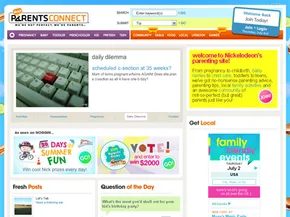
You grew up with the yellow sponge. Or maybe the blue alien. Or the talking truck. Now, the network behind those characters is trying to hook you again, but this time the medium is the web, not the television set. Viacom, the corporate giant that owns Nickelodeon and MTV, launched ParentsConnect.com as a dedicated space for modern mothers and fathers. It’s not just a marketing funnel. It’s a digital village square for anyone currently parenting, planning to parent, or just curious about the chaos.
The site operates on a simple premise: raising kids is messy. There is no manual. There is no exact science. Because of that, the content spans the entire timeline of childhood, starting with pregnancy and stretching out to the turbulent teen years. It’s comprehensive in scope, if not in simplicity.
How ParentsConnect structures community advice
The core of the site is the community section. Here, users don’t just read static articles; they engage. You can join groups based on specific tastes, age groups, or parenting styles. It’s a way to filter out the noise and find people who are actually facing the same problems you are. The discussions cover the mundane and the critical. You’ll find threads about shopping deals, local family events, and recipes that might actually taste like something other than cardboard.
But it’s not all playdates and coupon clipping. The site offers expert advice on topics that usually leave first-time parents scrambling. How do you breastfeed successfully? How do you handle the sudden negativity of a teenage daughter? The advice is framed as responsible and grounded, aiming to cut through the fear-mongering often found elsewhere online. Whether you are building a family from scratch, navigating a blended household with stepchildren, or just trying to survive the toddler years, the platform is designed to bring those disparate groups together under one roof.
The Disney alternative
While Viacom pushes its own ecosystem, Disney isn’t far behind. Disney Family Community represents a similar push into the social parenting space. It’s part of a broader trend where major entertainment brands realize that their audience doesn’t stop watching when the credits roll. They become parents. And parents need support.
These platforms are trying to solve the isolation of modern parenting. In the past, you relied on neighbors or extended family. Now, those networks are thinner. Digital communities fill the gap. They offer validation. They offer tips. They offer a place to complain about sleep deprivation without judgment.
The shift is significant. Entertainment companies are no longer just selling content. They are selling connection. For the parent scrolling through feeds at 2 a.m., that connection might be worth more than any cartoon. But does the data privacy trade-off matter? Or is the advice good enough to ignore the trackers? The sites don’t seem to worry about the latter. They just want you to stay, share, and keep coming back. The question is whether you will.
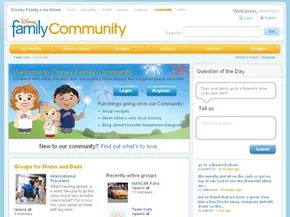
People assume online parenting communities are just about cute baby photos or complaining about sleepless nights. That’s only half the story. Take Disney Family Community, for instance. You’d expect it to be a digital theme park brochure. It isn’t. It’s a sprawling social network that treats parenting like the complex lifestyle management task it actually is.
Sure, the branding is heavy. The mouse ears are everywhere. But look closer at what’s happening under the hood. Users aren’t just posting pictures of Mickey. They are building digital scrapbooks. The platform allows parents to document family vacations, share activity logs, and discuss the messy reality of raising kids in a format that doesn’t feel like cluttered social media noise.
The search engine here is deceptively powerful. It doesn’t just scrape for discount codes on FastPasses. It maps out family-friendly activities in your specific local area. Why does that matter? Because finding a park with clean restrooms and stroller access isn’t a global search. It’s a hyper-local hunt. This site bridges the gap between corporate branding and genuine community resource sharing.
8: Café Mom
Then there is Café Mom. The name sounds like a place to sip latte and judge others’ parenting choices. The reality is much more functional, though still steeped in that specific brand of mom-centric social media.
MomsLikeMe
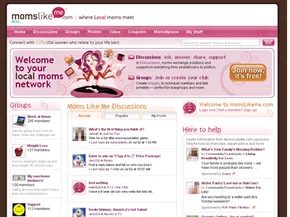
If you need a more targeted approach than the broad strokes of Café Mom, look toward MomsLikeMe. It operates on a similar premise but tightens the focus significantly. The site’s entire architecture is built around connecting mothers with others who share specific, often granular, life circumstances.
The value proposition here is precision. Instead of a general feed, users are matched based on criteria like location, age of children, and even specific parenting philosophies or challenges. This reduces the noise. You aren’t sifting through generic advice; you are talking to someone who is literally in the same boat, right down to the zip code.
For instance, if you are dealing with a newborn in a rural area and struggling with sleep training, the algorithm surfaces users with nearly identical demographics and issues. The result is a support network that feels less like a public square and more like a small group therapy session, albeit digital.
The site encourages users to build profiles that highlight these specific attributes. From there, the platform facilitates connections that are often more actionable than broader community discussions. It’s about finding a peer who can answer “how do I handle this specific situation?” rather than “what is the best way to raise a child?”
This specificity changes the dynamic of online parenting support. It moves away from the broadcast model of social media toward a utility model. You go there to solve a problem with someone who has solved it. The community aspect remains, but it is secondary to the practical utility of finding a mirror image of your own experience.
Critics might argue it feels restrictive, but for many mothers, the restriction is the feature. It filters out the vast majority of irrelevant content. You don’t want cocktail recipes. You want to know if the rash on your toddler is normal. MomsLikeMe tries to ensure you only see answers from people asking the same question.
The platform has evolved to include forums and direct messaging, but the core mechanism remains the demographic matching. It creates silos of support that are dense with shared experience. This can be empowering. It validates that your struggles are not unique, even if they feel isolating in real life.
Some users find the matching process slightly rigid. Not every life circumstance fits neatly into a dropdown menu. But the trade-off is clarity. In a world of endless scrolling, knowing exactly who you are being connected to and why provides a sense of direction. It turns the chaotic sprawl of social networking into a focused resource.
The site also hosts local meetups and events, bridging the gap between online connection and offline community. This is where the abstract support becomes tangible. You meet the person you’ve been arguing with about school choice in a coffee shop. The digital layer becomes a tool for real-world infrastructure.
Is it for everyone? Probably not. If you prefer the broad, eclectic mix of opinions found on larger platforms, this might feel too narrow. But for those seeking depth over breadth, it offers a different kind of solace. It’s about finding your tribe, specifically, rather than just finding a tribe.
The data privacy aspects are worth noting. Since the site relies on such detailed personal information, users must be mindful of what they share. The specificity is a double-edged sword. It provides relevance but also requires trust in the platform’s security. Most users find the trade-off acceptable, given the quality of the connections formed.
Ultimately, MomsLikeMe
6: BabyCenter
While MomsLikeMe leaned into local geography, BabyCenter takes a different approach to the parenting digital landscape. It isn’t about which neighborhood you live in; it’s about where you are in the timeline. This platform functions as a massive, global repository of pregnancy and parenting advice, catering to users at every stage from trying to conceive through the toddler years.
The site’s structure is built around user profiles that track a child’s age. This isn’t just a vanity feature. It allows the algorithm to serve hyper-relevant content. If your child is six months old, you won’t be flooded with advice on potty training. You’ll see updates on introducing solids or sleep regression. This personalization is what keeps users coming back, unlike generic parenting blogs that try to cover everything for everyone.
How the Platform Handles Safety and Ads
One of the biggest complaints about free parenting sites is the ad load. BabyCenter mitigates this with a tiered model. The core content remains free, supported by targeted advertisements. However, the platform offers premium subscriptions that remove ads and provide deeper access to expert content. For many parents, the value proposition lies in the curated nature of the information. It’s not just a blog post from a random user; it’s often vetted by pediatricians or developmental specialists.
This distinction matters. In online parenting communities, misinformation can spread quickly. BabyCenter’s editorial standards act as a filter. When you read an article on colic or fever management, there’s a baseline of medical accuracy that you might not find on a purely user-generated forum. That trust is their primary asset.
Community Dynamics and Forums
The discussion forums are the heartbeat of the site. Unlike the local groups on MomsLikeMe, these forums are topic-based. You might join a group for parents of premature babies, or another for those using specific feeding methods. The anonymity provided by these broader, topic-focused groups can make users more open about sensitive issues. They aren’t worried about being judged by their local community members.
Navigation is straightforward. Users can browse by their child’s age, by topic, or by the most active discussions. This flexibility helps parents find exactly what they need, whether it’s a quick answer to a sleep question or a long-term support group for developmental delays. The site also integrates tools like due date calculators and growth charts, which are standard but essential for tracking progress.
Why It Stands Out in a Crowded Market
With so many parenting apps and websites available, BabyCenter maintains its position through sheer volume and consistency. It has been around long enough to have a vast archive of content that Google ranks highly. When a new parent Googles a symptom or a behavior, BabyCenter articles often appear in the top results. This visibility drives traffic, which in turn reinforces the site’s authority in the eyes of both users and advertisers.
The mobile experience is another key factor. The app mirrors the website’s functionality, allowing parents to check updates on the go. Whether they’re in line at the grocery store or up at 3 AM with a colicky infant, the information is accessible. The interface is clean, prioritizing readability over flashy design. In a niche where users are often tired and stressed, simplicity is a feature, not just a aesthetic choice.
Comparing the Approaches
If you’re looking for local connections and printable deals, MomsLikeMe serves
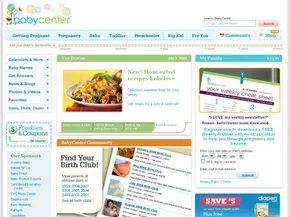
BabyCenter has been around since 1997. It’s owned by Johnson & Johnson, which gives it a certain corporate weight, but the people using it are just regular parents. Most of them are women, though the site does try to cater to fathers too. The reach is massive. They call their international branches “outposts,” and collectively, these hubs pull in over 6 million users across 18 different countries. You can read the content in seven different languages, making it a genuinely global resource rather than just a US-centric blog.
Unlike some family entertainment sites that focus on cartoons and movies, BabyCenter is strictly about the biological and emotional journey of raising kids. The target audience starts at the planning stages of pregnancy and extends until the child is eight years old. That’s a specific window. They cover everything from pre-family planning to the early developmental years, offering a mix of expert medical advice and peer-to-peer networking. You get professional guidance alongside the chaotic, real-life tips from other parents who are in the same boat.
The site is organized into clear tabs that map out the parenting lifecycle. You start with preparation, move through pregnancy, and then branch out into the specific stages of childhood. If you click on the baby section, for example, you’re immediately dropped into a library of articles. There’s stuff on understanding newborn behavior, how to mix formula, diaper changing basics, and general childcare advice. It’s practical. It’s not theoretical.
And yes, it’s on your phone. You can access BabyCenter via smartphone apps, and they maintain a presence on social platforms like Facebook and Twitter. This integration matters. Parenting doesn’t happen in a vacuum, and neither does the support system.
5: Hot Moms Club
Hot Moms Club takes a different angle. While BabyCenter is comprehensive and slightly clinical in its structure, this platform leans harder into the social and community aspects. It’s less about the step-by-step medical guide and more about the shared experience of being a modern mother. The “club” aspect implies exclusivity or a tight-knit group, which is a common psychological hook in niche social networks. It appeals to women who want to connect with others who are navigating similar life changes but perhaps want a less institutional feel than a site backed by a pharmaceutical giant. The content here tends to be more conversational, focusing on lifestyle, balance, and the emotional realities of motherhood rather than just the logistical “how-to” of changing a diaper. It fills the gap for parents who need validation and connection as much as they need information.

Forget the spreadsheets for sleep schedules. Forget the peer-reviewed articles on developmental milestones. If you’re a mom who still wants to feel like a person with a pulse outside of diaper changes, Hot Moms Club exists for that exact, slightly rebellious itch. It’s a social network that treats motherhood as one facet of a glamorous life, not the entire definition of it.
Think of it as what happens when a parenting forum gets a makeover from a Hollywood publicist. The founders, Jessica Denay and Joy Bergin, are moms who got tired of the sterile, advice-heavy echo chambers. They built a space that feels less like a clinic and more like a VIP lounge. It’s hip. It’s loud. It’s not for everyone.
Celebrity Gossip Over Diaper Advice
Most parenting sites are drowning in “how-to” content. How to wean. How to potty train. How to make organic puree from scratch. Hot Moms Club doesn’t care if you know the difference between stage 1 and stage 2 baby food.
Instead, you’ll find discussions about Dane Cook’s Isolated Incident Tour. You’ll see posts asking where Billy Ray Cyrus is playing next. The conversation shifts seamlessly from finding a good single guy in your zip code to planning a weekend getaway in Vegas.
“Unlike most parenting sites, Hot Moms Club is more of a social networking site for women who happen to be mothers rather than a place to connect with other parents.”
It’s a distinct pivot. The recipes are there. The parenting talk happens too. But it’s buried under layers of lifestyle content. You aren’t coming here for prenatal care tips. You’re coming here because you want to feel connected to a world that hasn’t completely stopped spinning just because you had a baby.
Who Is This Actually For?
The site isn’t trying to appeal to the masses. In fact, it actively repels a certain demographic. Men probably won’t find much traction here unless they’re single and actively hunting. The vibe is distinctly female-centric, focused on identity and excitement.
It’s for the mom who feels like she’s losing herself in the role. The one who misses the thrill of nightlife or the buzz of celebrity culture. The founders understand that being a parent doesn’t mean you have to become a martyr for domesticity. You can still want to be seen. You can still want to be entertained.
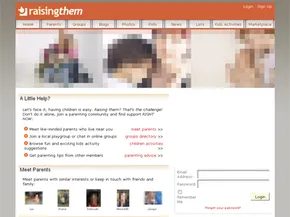
4: Raising Them
3: JustMommies
If Raising Them was about the neighborhood, JustMommies is about the echo chamber. It is a niche social network dedicated entirely to mothers, cutting out the noise of general parenting forums. The premise is simple: a space where moms can talk to other moms without the gender dynamics or broad generalizations of sites like Facebook or generic parenting hubs.
The platform leans heavily into community. It isn’t just a place to scroll; it is a place to belong. Users join groups based on specific life stages, interests, or locations. A mom in Chicago dealing with toddler tantrums has a different immediate need than one in Seattle navigating preschool applications. JustMommies structures its architecture to reflect that reality. You aren’t just a username; you are a member of a specific cohort.
This focus on identity matters. The site attracts users who want validation, advice, and venting space from people who are walking the same path. It’s less about coordinating play dates and more about emotional support. The “moms” in the name isn’t just branding; it’s the filter. Fathers, partners, and general caregivers are largely excluded from the core discussions. This creates a tighter, more specialized community, but it also limits the scope of interaction.
For the tech-savvy parent, the appeal is the curation. You don’t have to wade through unrelated content to find someone who understands the specific struggle of weaning a baby or choosing a college. The algorithm prioritizes relevance within the maternal experience. It’s a vertical social network in a horizontal world.
But there is a trade-off. The more specific the community, the smaller the pool. You might find deeper connections, but you lose the breadth of general advice. Is it worth the exclusivity? For many, yes. The isolation of modern parenting is real. JustMommies offers a digital lifeline to people who get it.
The value isn’t in the features. It’s in the shared experience.
The platform encourages discussion through forums, blogs, and photo sharing. It’s not flashy. It doesn’t have the sleek UI of a Silicon Valley startup. It feels like a community bulletin board that never closes. That’s a feature, not a bug. It signals permanence and trust. Users return because they know people are listening.
Where does it fit in the broader ecosystem? It’s a complement to broader networks. A mom might post a generic question on Facebook and get mixed results. On JustMommies, she gets targeted advice from peers. It’s about quality of interaction over quantity. The site thrives on engagement. The more you post, the more you receive. It’s a reciprocal ecosystem built on empathy.
Does it replace real-world friends? No. But it augments them. It provides a backup network for moments when your immediate circle is asleep, busy, or miles away. In a world where parenting can feel solitary, that constant thread of connection has value. The platform doesn’t claim to solve the problem. It just makes it easier to manage.
The content is user-generated. That means it’s unfiltered. You’ll find triumphs, failures, and everything in between. It’s raw. Some might find that chaotic. Others find it real. The site’s moderation focuses on safety and respect, not sanitizing the experience. That distinction matters. It keeps the community grounded.
As

JustMommies operates under a slightly misleading name. Despite the label, it is not exclusively for mothers. It is a broader social networking hub for parents, though the interface heavily leans toward maternal interests. Father-focused sections exist, but they are niche compared to the main traffic. Like its peers in the parenting tech space, it aggregates expert guidance ranging from pre-pregnancy logistics to homeschooling curriculums.
The differentiator isn’t the generic social features. It is the depth of the message boards. The community engagement is staggering. As of June 25, 2009, the platform logged 1,616,786 distinct topics and over 16 million posts generated by nearly 47,600 members. That volume suggests a level of peer support that static articles simply cannot match.
Deep-dive resources on JustMommies
Beyond the forums, the site offers a curated library of content. The community section hosts hundreds of browseable categories, but the editorial team backs it up with comprehensive articles aimed at reducing parental anxiety. You will find basic recipes, health and fitness trackers, and educational resources. A standout tool is the baby-name-finder, which helps navigate the endless options. Users can also engage with quizzes and video articles that break down complex topics into digestible formats.
For practical daily management, the site includes functional tools like body mass index (BMI) calculators and breastfeeding trackers. However, the pregnancy calendar is arguably the most critical feature. It allows expectant mothers to chart their journey week by week. More importantly, it connects them with advice from women who are currently in or have recently completed the same phase. This real-time peer validation is what keeps users coming back.
Transitioning to Famster
2: Famster
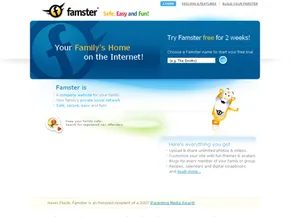
While most social platforms are free, Famster stands out as the exception. It’s not just another place to post updates. It’s built specifically for families, treating the household as a single unit rather than a collection of isolated profiles. If you’re tired of fragmenting your family updates across Facebook, Instagram, and group chats, this might be the answer you’re looking for.
The catch? You have to pay.
It’s a paid site. Period. But before you close the tab, there’s a two-week free trial. This isn’t a gimmick. It’s a genuine test drive. Use those 14 days to see if the platform fits your family’s rhythm. If it does, the subscription runs $9.95 a month. Is that steep? Maybe. But what you get for that price is often more than you’d find in a free alternative.
Storage and Space
Let’s talk about storage. In a world where cloud space is often rationed, Famster hands you a lot of room.
Each account comes with 1 gigabyte (GB) of file cabinet space for documents. That’s enough for scaned records, school forms, or important PDFs. You also get another 1 GB dedicated to video. Video is heavy. It eats up space fast. Having a dedicated bucket for it is a relief.
But the real kicker is photos. You get unlimited photo uploads. No caps. No hidden fees. For families who document every milestone, this is huge. You can fill your profile with images without worrying about hitting a limit.
You also get a blog and scrapbook features. These aren’t just add-ons. They’re core parts of the experience. You can write. You can curate. You can make it look like a real family website.
Your Own Domain
Famster lets you go further. You can create a virtual family website. And here’s the cool part: you can use your own domain name.
Imagine howstuffworksfamily.com. That’s not just a cool URL. It’s your brand. You can host your Famster page there. You can even set up personalized email addresses. This turns a social profile into a actual web presence.
Customization is deep. Upload photos. Design scrapbooks. Post videos. Write blogs. Create personal calendars. It’s a full suite of tools for managing family life online.
You can also set up instant messaging between family profiles. And it’s not one-size-fits-all. You can set parameters for each child. This means you can control who they chat with. You can limit what they can say. It’s granular control in a way that public social networks just don’t offer.
Safety First
Security is often an afterthought on social sites. Famster puts it front and center.
The platform includes a security center. It’s not just a setting. It’s a feature. It connects to the registered-sex-offender registry.
Here’s how it works. If a registered sex offender moves into your neighborhood, you get an alert. It’s not a rumor. It’s not a guess. It’s based on actual data. This feature alone might justify the subscription for many parents. It’s a safety net that doesn’t exist on free platforms.
Is It For You
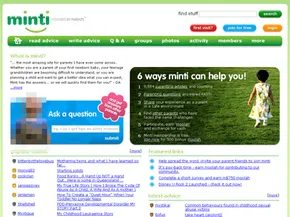
Minti isn’t about mints. It’s a social network built for parents who want actual answers instead of generic platitudes. The name came from a pool of 40 options, selected because it evoked the fresh, positive feedback the founders wanted from early surveys. It’s a bit ironic, but it stuck.
Unlike many parenting platforms that skew heavily female, Minti draws a noticeable number of male users. The core purpose is simple: a forum for advice and networking among parents facing similar problems. You aren’t just scrolling past ads; you’re engaging with a community.
How Minti structures parent knowledge
The platform relies on user-generated content as its backbone. Think of it as a parenting-focused Wikipedia where the community curates the quality. You’ll find:
- Social ranking systems that push useful posts to the top
- Tag clouds and user tagging for better discovery
- Free blogs for personal updates and advice columns
- Sub-groups tailored to specific parenting stages or interests
- Personal homepages and private lounges for deeper connection
- Detailed Q&A sections that mirror the utility of older forums
- Search functionality that cuts through the noise across all content types
To post a blog or write advice, you have to register. It’s a gate, but it keeps the signal-to-noise ratio higher. Once you’re in, you get full access to the database. You can also rank content you find valuable. The theory is straightforward: better advice rises to the top. Everyone benefits from the collective intelligence.
Why the content matters
Topics range from pregnancy and baby feeding to childcare options. The interface is clean. Navigation doesn’t fight you. The lasting feature remains the user-written content. It shows the intelligence of the members. This sets Minti apart from other sites that rely on gimmicks or flashy design over substance.
If you’re looking for a place where parents talk to parents, rather than at them, this is one of the few that still focuses on the advice itself.
For more on social networking sites, visit the links on the next page.