


Your computer is fast enough to stream an English bulldog on a skateboard. It handles “Lego Lord of the Rings” without any problem. For most people, speed is the most important thing. It is just a toy for scientists solving complex global problems. A top-tier PC with an i7 processor can handle about 158 billion calculations per second. That number is impressive for gaming. This alone is not enough for discoveries.
That’s why researchers are so excited about the Cray Titan supercomputer.
Launched in October 2012, Titan is about more than just joining the fray. It claimed the title of world’s fastest computer. It had held the crown for six months prior to that. The previous winner was IBM Sequoia Blue Gene/Q from Lawrence Livermore National Laboratory in California. The Titan knocked it off the podium.
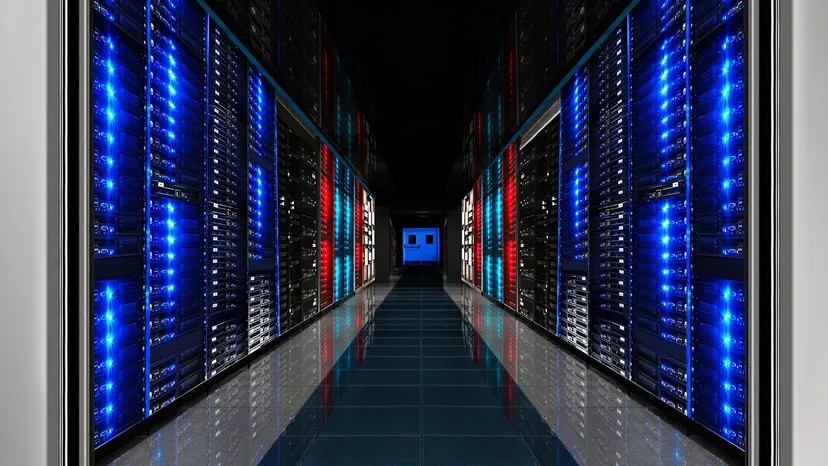
The difference is staggering. Titan’s theoretical top speed is 27 petaflops. This means 27,000 trillion calculations per second. Think about it. Hundreds of thousands of times faster than desktop speeds. If you want to put the Titan on your desktop, you’ll need a space the size of a basketball court. It doesn’t sit on a desk. It takes up space.
Why scientists need 27 petaflops
Speed itself is just a number. The value is due to speed. The Titan processes large amounts of data. Scientists use it to simulate Earth’s climate in great detail. These simulations may reveal new ways to combat global warming. They are not just guessing. They use complex models.
A wide range of applications. Engineers use Titan to design highly efficient internal combustion engines. They also develop better solar panels. In medicine, biological simulations help speed up the testing of new drugs. On a purely scientific level, researchers simulate the breaking of molecular bonds. This gives them insight into insight into one of nature’s fundamental processes.
“Titan’s incredible speed makes it an excellent tool for solving really complex problems involving large amounts of data.”
The new architecture of the future
Titan’s importance lies in its speed. Equally important in terms of design. It pioneered a new approach to supercomputers. For years, the road to speed was simple. Build machines with thousands of central processing units (CPUs). Break the calculation into smaller parts. Parcel them out to those thousands of chips.
This worked. Until it didn’t. The downside is energy. All those CPU chips required enormous amounts of electricity. Titan solves this problem by pairing each of its 18,688 CPUs with a graphics processing unit (GPU). These chips are the same ones used in high-end gaming computers.
GPUs accelerate computations. They also draw less power than CPUs. The result is a machine that is faster than its predecessors. It is also significantly more energy efficient. This hybrid design sets new standards.
Path to exascale computing
Scientists see Titan as a blueprint. It blazes the way toward **exascale-class computers. These are machines a thousand or more times as fast than the most powerful supercomputers of the time. Titan has proven that hybrid CPU-GPU architectures can deliver strong performance without burning through the grid.
Frequently asked questions
Why are supercomputers fast?
Supercomputers are fast because they use thousands of processors working in parallel. They also utilize high-speed memory and storage systems to quickly transfer data between chips.
How does the Cray Titan compare to a regular PC?
Titan’s speed is hundreds of thousands of times faster. A PC does 158 billion calculations per second. The Titan does 27,000 trillion.
How is Titan different from older supercomputers?
Older systems relied solely on CPUs and consume large amounts of power. Titan combines each CPU with a GPU. This hybrid design increases speed and energy efficiency.


