Google is moving beyond simply adding AI features to its phones; it is fundamentally restructuring how Android users interact with their devices. With the announcement of Gemini Intelligence, the tech giant aims to transform its AI assistant from a passive tool into an active agent capable of executing complex, multi-step tasks across different applications without constant user intervention.
This move signals a pivotal moment in mobile technology: the transition from an ecosystem defined by siloed apps to one driven by conversational, task-oriented AI.
From Assistant to Agent: What Gemini Intelligence Does
Historically, digital assistants like Siri or early versions of Google Assistant were reactive—they waited for a command to play music or set a timer. Gemini Intelligence represents a shift toward agentic AI, which can proactively manage workflows.
According to Ben Greenwood, a director and product manager for Android Core Experiences, the goal is consistency and personal understanding. “I really just want one assistant that I’m working with who understands me and knows me personally,” Greenwood explained.
Key capabilities include:
* Cross-App Task Execution: Gemini can create a shopping order directly from a grocery list stored in your notes app.
* Intelligent Autofill: It can populate complex forms by pulling data from connected services, such as retrieving a driver’s license number from Google Drive.
* Contextual Understanding: Users can photograph a brochure and ask Gemini to find a tour suitable for a group of six, requiring the AI to interpret visual data and apply logical constraints.
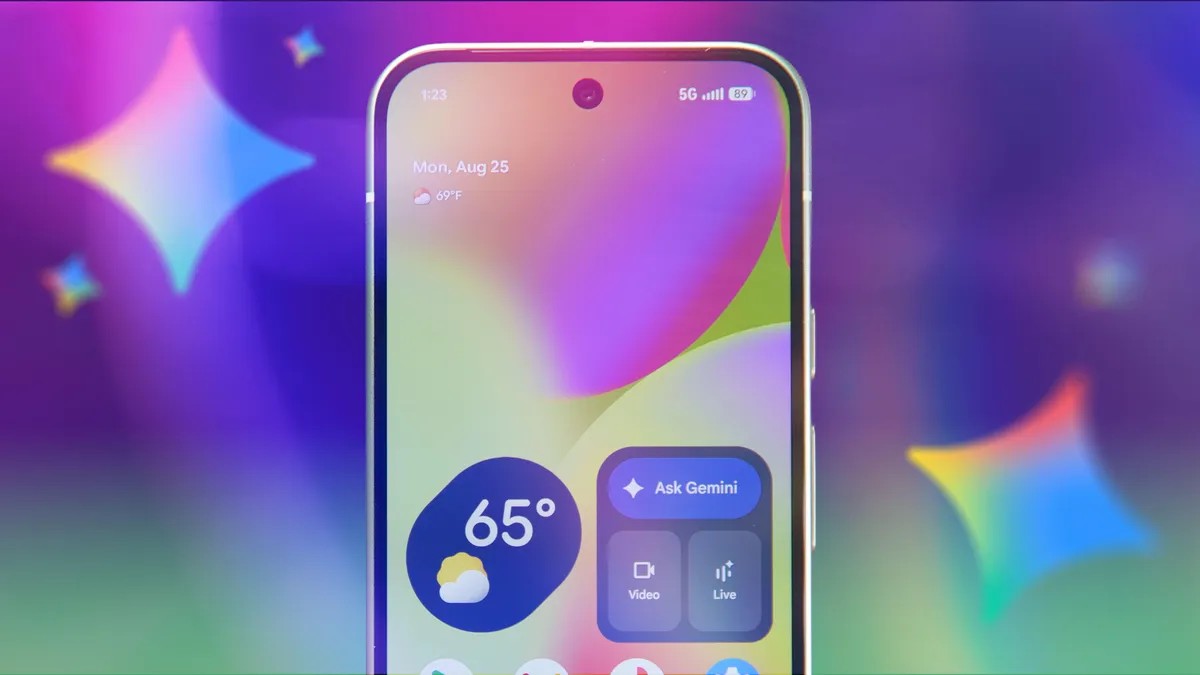
* Custom Interface Generation: The AI can generate custom widgets on the home screen based on simple prompts, such as displaying temperature in both Fahrenheit and Celsius.
“The difference between the technology of yesterday and the technology of Gemini Intelligence is that it’s there with you.”
— Ben Greenwood, Director, Android Core Experiences
A Unified Ecosystem Across Devices
This update is not limited to smartphones. Google demonstrated these capabilities during its Android Show presentation, highlighting a strategy to unify the user experience across its entire hardware portfolio.
- Initial Rollout: Gemini Intelligence will launch later this summer on Google Pixel phones and select Samsung Galaxy devices.
- Broad Compatibility: The features will also extend to Android Auto, Wear OS (smartwatches), and Google’s smart glasses.
While Google has not specified exactly which Samsung models will be compatible, the timing aligns with Samsung’s expected unveiling of its next-generation foldable devices. This partnership reinforces the trend of major Android manufacturers collaborating closely with Google to integrate deep AI features, potentially giving them a competitive edge over Apple, whose Siri has yet to achieve similar levels of contextual agency.
Addressing “AI Fatigue” with Subtle Utility
Google is aware of a growing sentiment among tech users: AI fatigue. After years of splashy announcements and gimmicky features, many consumers are skeptical of AI that demands attention rather than saving time.
To counter this, Google is focusing on “quiet” AI—features that enhance existing behaviors rather than forcing new ones.
- Rambler: A new feature in Gboard (Google’s keyboard) that filters out filler words, repetitions, and self-corrections during voice-to-text transcription. For example, if you say, “Get toast and bananas… actually no bananas,” Rambler records only “toast.” It also supports seamless switching between languages within a single message.
- Invisible Automation: Features like autofill are designed to work in the background, reducing the cognitive load on the user without requiring them to learn new commands.
“You’re not trying to teach a new behavior,” Greenwood noted. The strategy is to make AI feel like a natural extension of the user’s intent, not a separate tool that requires mastery.
The Bigger Picture: The End of the “App-Centric” Phone?
Google’s push into agentic AI is part of a broader industry shift. Industry analysts, including Ming-Chi Kuo, have noted that users are increasingly frustrated by “app silos.” The desire is not to manage dozens of separate applications for music, rides, and messaging, but to simply state a need and have the phone fulfill it.
This trend is gaining momentum beyond Google:
* OpenAI is reportedly developing its own AI-powered smartphone, with mass production potentially beginning in the first half of next year.
* Amazon is exploring a return to the smartphone market with a device focused on AI features rather than traditional apps.
While Gemini Intelligence does not yet eliminate apps entirely, it significantly reduces the manual effort required to use them. By allowing an AI to bridge the gap between different services, Google is laying the groundwork for a future where the smartphone interface is less about icons and more about conversation and action.
Conclusion
Google’s Gemini Intelligence marks a decisive step toward the AI-first smartphone, prioritizing task completion over app navigation. By integrating deep, cross-platform capabilities into Android and focusing on subtle, user-friendly automation, Google aims to solve real-world friction points rather than just showcasing technological prowess. As competitors like OpenAI and Amazon explore similar hardware strategies, the industry is moving rapidly away from the traditional app-centric model toward a future where AI acts as the primary interface for daily digital life.