


Light travels about 186,000 miles per second. For decades, such speed was abstract to the average Internet user. Now, fiber optic networks like Verizon FiOS are finally starting to bring that speed into your living room.
This isn’t just faster internet. This is a fundamental change in how information is transferred from the service provider to the screen. Fiber optic cables use hair-thin glass fibers to transmit information in the form of laser pulses. When these light pulses reach your home, a converter converts them into electrical pulses that computers can understand.
Businesses have relied on this technology for years to quickly transfer large amounts of data. Recently, Fiber to the Home (or FTTH ) has brought this infrastructure directly to residential customers. Bandwidth is no longer a luxury as more and more people download videos, movies and high-resolution photos. It’s a must have. Verizon claims its service can download media 25 times faster than traditional cable infrastructure.
How optical fiber works
FTTH is not a single brand. It is a technology standard. More than 10 million homes around the world already have this connection. The FTTH Council considers FTTH to be “future proof”. Why? Because it can handle the explosive growth in web traffic expected in the coming decades.
The physical differences are considerable. Traditional copper coaxial cables struggle with interference and distance degradation. Fiber optic systems use very thin, very clean glass tubes. As wide as a human hair. The light signal is reflected from the sides of this tube, allowing the information to pass through the twists and turns without significant loss of quality.
Computers convert digital data into optical signals. These signals travel along optical fibers. At the receiving end, another device converts the light into digital information. This system carries voice, data, pictures, and movies simultaneously. Verizon uses the same network to provide FiOS internet, TV and phone services.
Installation and Hardware Setup
Verizon installs the service on your primary computer for free. But there are catches. Month-to-month agreements come with installation fees. Additional computers are available for an additional fee.
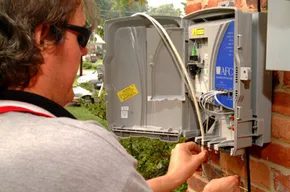
Professional installers run special wiring. They place wall jacks where needed. Crucially, they install an optical network terminal, or ONT. This box sits inside or outside your residence. Other FiOS devices such as power supplies and battery backup units are also supported.
Once the ONT is installed, a technician will inspect your home’s wiring. Is it compatible with the new service? If not, install the appropriate wiring. They also set up the FiOS router and software. Your computer is connected to the Internet.
Compatibility is important. FiOS runs on computers running Windows Vista, XP and 2000. It is also compatible with most Macintosh systems. The technical data varies according to the service level. Linux users can configure their systems to work, but Verizon does not support them. If you want guaranteed support, use a supported operating system.
Plans, Pricing, and Availability
FiOS is not yet widespread. Fiber to the home availability depends on the network structure and local equipment. Speed may be required, but access is determined by geographic location.
If it’s available, the value proposition is strong. FiOS is very competitively priced. Includes features such as email and web hosting. Verizon offers a variety of plans. Options and pricing structures vary. Pay for the bandwidth you need.
The technology itself is powerful. It handles the heavy lifting of modern digital life. But is it worth switching? It depends on where you live. And what are you trying to do online? The future of home internet is bright. literally. It moves at the speed of light.

Very few companies have made fiber-to-the-home (FTTH) the core of their service offerings. The market is still dominated by cable and DSL, but a handful of players are pushing the technology to the doorstep. Verizon leads the charge with FiOS, while AT&T and Cox Communications are also navigating this space, though their strategies differ significantly.
Verizon FiOS: Speed and Subscriptions
Verizon categorizes its FiOS plans using a simple hierarchy: “fast,” “faster,” “faster plus,” and “fastest.” The reality of these labels is that download speeds range from 10 to 50 Mbps. Upload speeds can reach up to 20 Mbps, which is a notable advantage over many traditional cable connections. Prices shift depending on whether you bundle the internet with Verizon phone service.
Beyond the bandwidth, Verizon packs these plans with digital amenities. Subscribers get round-the-clock live technical support from the Verizon Fiber Solutions Center. The digital suite includes nine e-mail accounts, 10 megabytes of web hosting space, and member discounts.
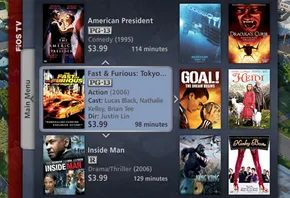
The entertainment portal is robust. Users access video, music, and games through the Verizon Arcade. You can read movie reviews, watch trailers, and get album critiques. There’s also a social layer: start blogs, join discussion forums, and post photos. News channels and comprehensive programs like ESPN 360, Disney, Movies.com Max, and Soapnetic are included.
But here is the catch. Fiber optic lines offer high bandwidth, but actual connection speeds fluctuate. Several factors interfere:
- Local configuration: How your computer is set up.
- Hardware limitations: The quality of your home networking gear.
- Network congestion: The number of computers on your network and traffic on the ISP’s end.
- Wiring issues: The type and condition of wiring at your location.
- External bottlenecks: The speed of the websites you visit.
To get the maximum theoretical speed, you need a hard-wired Ethernet connection. Wi-Fi introduces friction that fiber optics simply shouldn’t have.
AT&T U-verse and the FTTN Shift
AT&T’s approach is more complex. For years, the company resisted making fiber-to-the-home a central strategy. Instead, it focused on new developments and leaned heavily on fiber-to-the-node (FTTN). In this model, fiber runs to a local hub, but the final stretch to your house often uses standard DSL technology. Their broadband service under this hybrid model is branded as U-verse.
AT&T U-verse bundles internet, voice, and television. Plans start at $44 a month and go up to $124. The top-tier plan offers up to 10 Mbps downstream and 1.5 Mbps upstream. It includes up to 320 TV channels, sports and movie packages, and voice service.
The digital perks mirror Verizon’s in scope. Users can play online games, access the AT&T blue room for exclusive music events, and enjoy unlimited online storage with Flickr. The package also provides a homepage, 2 gigabytes of e-mail storage, and 10 additional e-mail accounts.
Cox Exploring the FTTP Path
Cox Communications has recently begun exploring fiber-to-the-premises (FTTP) as an option. The company requested information from vendors on the subject. In the past, Cox provided FTTP solutions only for planned communities as they were being built out. Now, it seems they are looking to expand that infrastructure into the broader market.
The Bottom Line
The technology works, but the user experience is often bottlenecked by the user’s own equipment. Fiber-to-the-home delivers the raw potential, but achieving it requires hard-wired connections and decent hardware. Verizon’s FiOS offers a straightforward, high-speed package with strong upload speeds. AT&T’s U-verse remains a hybrid solution, blending fiber nodes with DSL last-mile connections, though its top plans still lag behind Verizon’s upload capabilities.
Frequently Answered Questions
What is Verizon Fios called now?
As of July 2020, Verizon Fios is now known as Fios by Verizon.
Related Articles
- How Fiber-to-the-Home Broadband Works
- How Hybrid Networks Work
- How Mobile Broadband Services Work
- How Shared Computing Works
- How Telephones Work
- How Wireless Mesh Networks Work
More Great Links
- AT&T U-verse
- Fiber to the Home Council
- Verizon
- USA Today: “More choosing fiber-optic Internet service worldwide over cable”
Sources
- Crosby, Tim. “How Fiber-to-the-Home Broadband Works.” HowStuffWorks.com. https://communication.howstuffworks.com/fiber-to-the-home.htm
- FTTH Council. “Fiber to the Home: Advantages of Optical Access 2008.” http://www.ftthcouncil.org/UserFiles/File/BBP_Apr08_FTTHPrimer.pdf
- Verizon. http://www22.verizon.com/content/consumerfios

