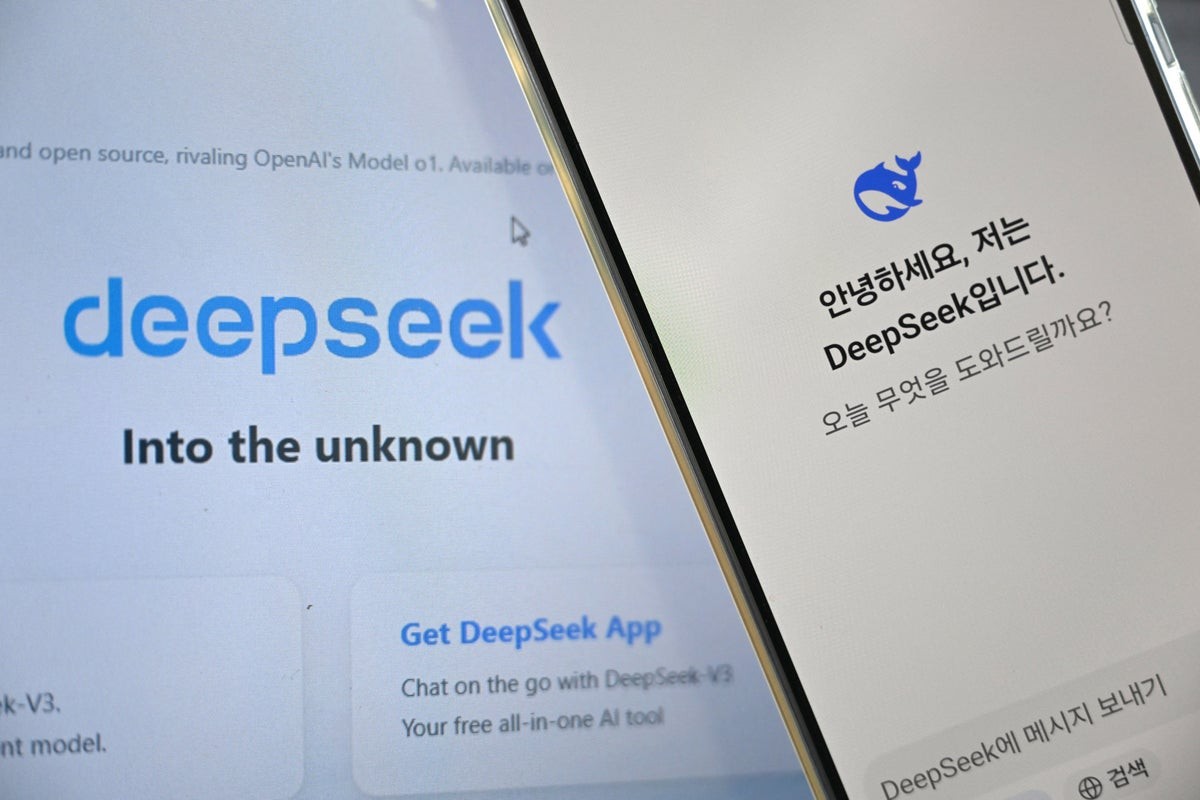
The tech industry is witnessing a shift in how it reacts to artificial intelligence breakthroughs. When Chinese startup DeepSeek released its V3 and R1 models last year, the impact was seismic, triggering global tech sell-offs and forcing investors to rethink the astronomical costs of AI infrastructure.
However, the launch of the latest model, DeepSeek-V4, has met with a much quieter reception. This lack of market volatility suggests that what was once considered a “black swan” event has rapidly become the new industry standard.
From Disruption to Normalization
Last year, DeepSeek disrupted the status quo by proving that high-performing models could be trained with a fraction of the computing power used by U.S. giants. This revelation challenged the assumption that massive capital expenditure was the only path to AI supremacy.
Today, that shock factor has evaporated for several reasons:
– Market Adaptation: Investors have become accustomed to the rapid cycle of efficient, low-cost model releases.
– Academic and Industry Diffusion: Innovations in model architecture that once seemed revolutionary are now being widely studied and implemented across the sector.
– Predictable Progress: As Lian Jye Su, chief analyst at Omdia, noted, the path taken by V4 was “rather predictable,” meaning the surprise element—which drives market movement—was absent.
A Crowded Field and Narrowing Gaps
While DeepSeek-V4 Pro shows clear improvements over its predecessors, it no longer appears to be an outlier. Benchmark data from Artificial Analysis indicates that while the model is highly capable, it is now competing in a much tighter pack.
The company’s once-dominant lead in the Chinese market is being aggressively challenged by domestic rivals such as Kimi and Qwen. In the previous cycle, DeepSeek’s leap ahead of its peers created a vacuum of competition; now, the market is saturated with high-performing, open-weight models, making individual launches less impactful on global valuations.
The Geopolitical Subtext: Chips and Sovereignty
Despite the muted financial reaction, the technical implications of DeepSeek-V4 remain significant, particularly regarding the ongoing U.S.-China tech rivalry.
As the United States tightens export controls to restrict China’s access to high-end American semiconductors, DeepSeek has pivoted its strategy. A key feature of the V4 launch is its optimization for Huawei chips.
“The ‘wow factor’ was last year — that’s already priced in,” says Alfredo Montufar-Helu, managing director at Ankura China Advisors. “What matters now is whether China can continue advancing on AI development, and potentially do so with its own chips.”
This shift moves the conversation from mere software efficiency to hardware sovereignty. If Chinese firms can successfully develop sophisticated AI using domestic silicon, it could fundamentally alter the effectiveness of Western trade restrictions and reshape the global geopolitical landscape.
Conclusion
The lukewarm response to DeepSeek-V4 signals that the era of “AI surprises” is maturing into a period of steady, incremental progress. While the market is no longer startled by efficient models, the real battle has shifted toward whether China can sustain this momentum using its own domestic hardware.