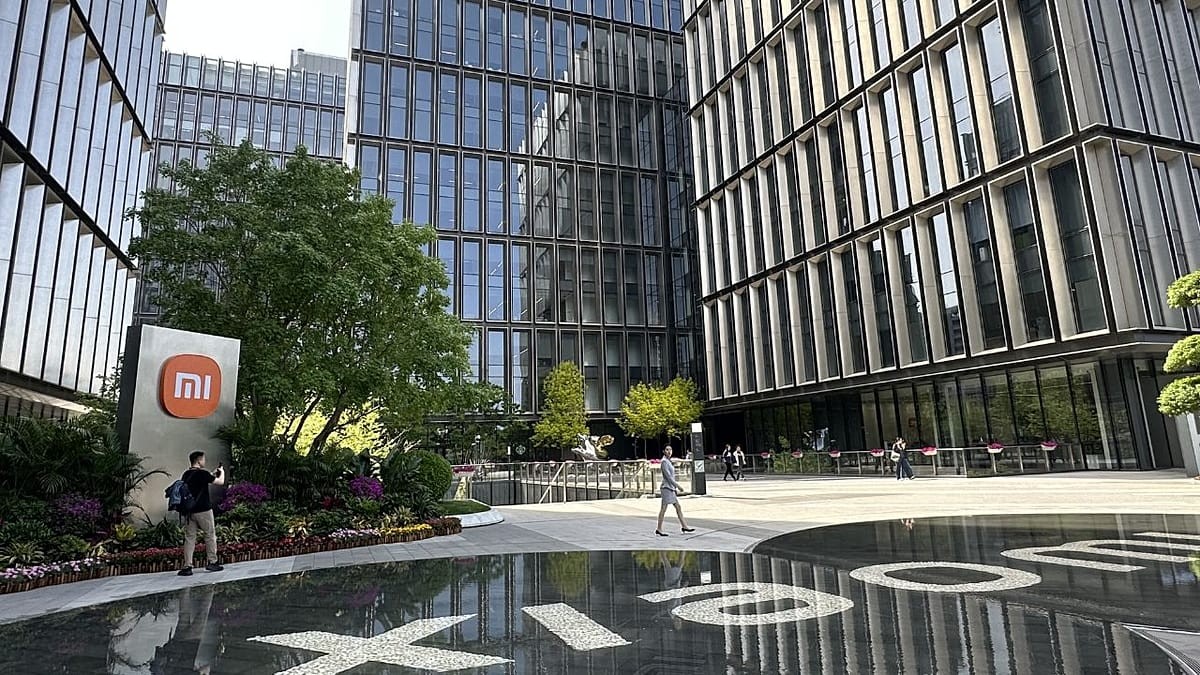
The scale of Xiaomi’s Beijing campus is designed to impress. From sprawling buildings and landscaped courtyards to whimsical sculptures of flying pigs and rabbit mascots, the facility feels more like a tech-driven city than a traditional manufacturing plant. However, the real story lies within the Xiaomi Smart Factory, an 81,000-square-meter complex dedicated to one of the most efficient production lines in the mobile industry.
From Simulated Living Rooms to Precision Engineering
Most people associate smartphone manufacturing with sterile, robotic assembly lines. While Xiaomi utilizes those, their process begins in highly unconventional environments. To perfect camera technology, the company has built a massive, 50-meter testing corridor that mimics real life.
Instead of just dark rooms and light boxes, the facility includes:
– A Chinese-style restaurant
– A Starbucks corner
– A staged living room
– Indoor amusement areas
These “real-world” sets are critical for fine-tuning imaging systems. By testing sensors in environments with varying light—from the harsh glare of a simulated sunny day to the dim atmosphere of a living room—Xiaomi can refine how its devices, such as the Leica-co-engineered 17 Series, handle detail preservation and optical interference. This ensures that when a user takes a photo in a restaurant or a park, the results are consistent and natural.
The Choreography of Automation and Human Oversight
Once the software and optics are perfected, the process moves to the assembly halls. These areas are characterized by clinical precision and a high degree of automation.
The factory operates with an 81% automation rate, utilizing “delivery boys” (automated carts) and massive robotic arms to handle repetitive, high-precision tasks. The efficiency is staggering:
– Output Speed: A new smartphone rolls off the line every six seconds.
– Hourly Volume: The plant produces approximately 600 phones per hour.
– Annual Capacity: The facility is on track to exceed 10 million units per year.
Despite this heavy reliance on robotics, human expertise remains a cornerstone of the operation. Roughly 220 workers manage the 310-meter production line, acting as the final layer of quality control. They monitor for anomalies, perform complex inspections, and intervene when the automated systems encounter irregularities.
A Rigorous Path to the Consumer
A smartphone undergoes an exhaustive gauntlet of tests before it is cleared for shipping. The manufacturing journey includes:
1. Component Placement: Surface-mount technology lines install components onto circuit boards.
2. Functional Verification: Motherboards undergo dozens of simultaneous checks to detect defects.
3. Structural Integrity: Devices are reinforced with steel plates and cushioning to protect fragile internal parts.
4. Environmental Testing: Units undergo water-resistance checks and aesthetic inspections.
5. “Aging” Chambers: To ensure long-term reliability, phones are placed in specialized chambers that can test over 2,400 devices simultaneously for power consumption, antenna performance, and sensor accuracy.
Market Dynamics: A Shifting Global Footprint
Xiaomi’s manufacturing prowess is a key driver in its shifting market position. While the company faces a highly competitive landscape, its regional performance shows a diverging trend.
According to research from Omdia, Xiaomi’s market share in China grew to 15% in 2025. While its global share saw a slight dip to 13%, the company is seeing significant success in Europe, where its market share rose to 20%. This growth in Europe helps solidify Xiaomi’s position as the world’s third-largest smartphone manufacturer, proving that their strategy of offering everything from budget models to €2,000 premium Leica-powered flagships is resonating with diverse consumer bases.
Through a combination of hyper-realistic environmental testing and high-speed automated assembly, Xiaomi has built a manufacturing ecosystem designed to scale rapidly while maintaining the precision required for premium hardware.