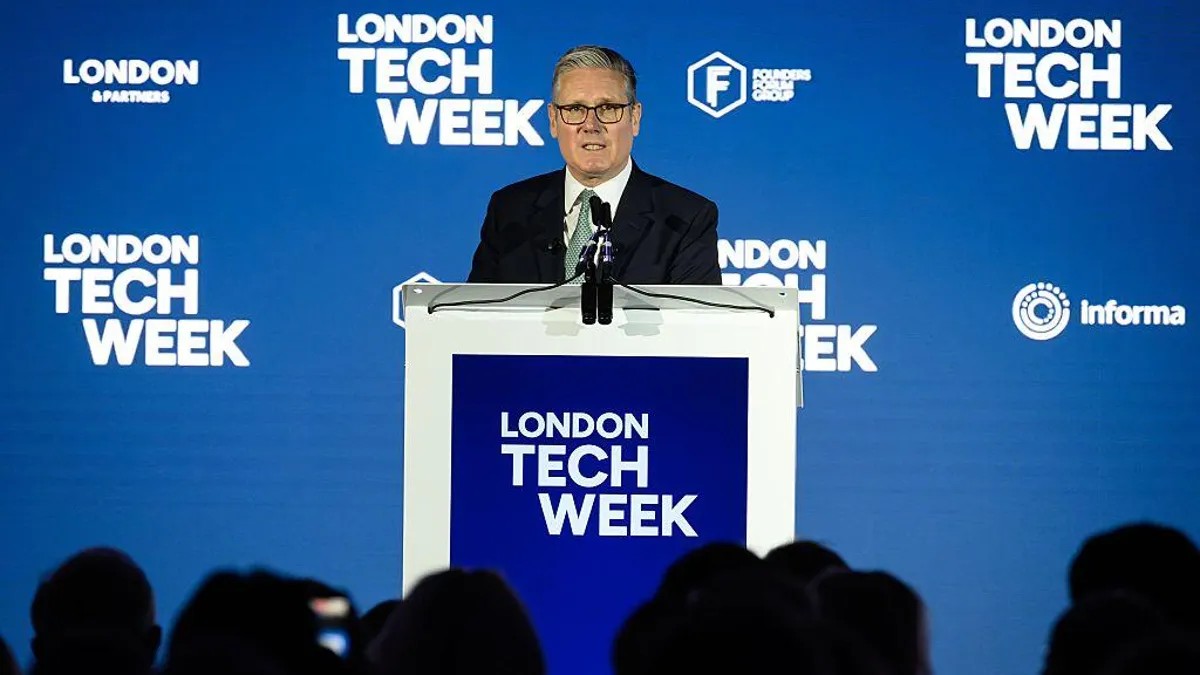
Keir Starmer is putting the pedal to the metal.
The British Prime Minister walked onto the London Tech Week stage last Monday. He looked directly at the tech giants. His message was simple. Stop kids from taking, sending, or receiving nude images. Do it fast.
Or else.
“I am calling on tech companies… to introduce device controls,” Starmer said. “If they choose not to… we will act.”
That is the threat hanging in the air.
The government has set a deadline. Three months. In that window, Apple and Google have to build the tech. Not just an app. Not a filter that gets bypassed if you tweak your settings. Device-level controls. Hard stops on the hardware. Both new phones and the ones already in pockets need this upgrade.
Google responded with PR smoothness.
“We are working constructively with UK partners… to find effective, privacy-preserving Solutions.”
A standard dance. A promise of safety wrapped in jargon about privacy. Apple, meanwhile? Radio silence. No immediate comment. Typical.
Why the urgency? Because teens are naked on the internet and their parents have no clue.
It’s illegal. It’s dangerous. Blackmail waits at the corner. Bullying follows close behind. Sexual harassment. Exploitation. The UK is betting that tech can fix this where society hasn’t managed to. They want to ban the photos at the source.
Graeme Biggar, who runs the UK’s National Crime Agency, thinks this stops the abuse before the first picture is taken.
“Once those images exist,” he notes, “they can be used for blackmail… Preventing children… from taking [them]… is an important step forward.”
Logical, maybe. But the civil liberty folks are twitchy.
Silkie Carlo from Big Brother Watch hates this approach. She calls it outrageous.
“Population-wide ID checks,” she warns. To use your phone. To use your laptop. She sees a surveillance state masquerading as child protection.
And there is more coming.
Starmer is considering a ban on social media for anyone under 16. Look at Australia. They did it there. Now the UK is sniffing at the idea.
What does a future without digital privacy even look like?
We won’t know for three months. Maybe longer.