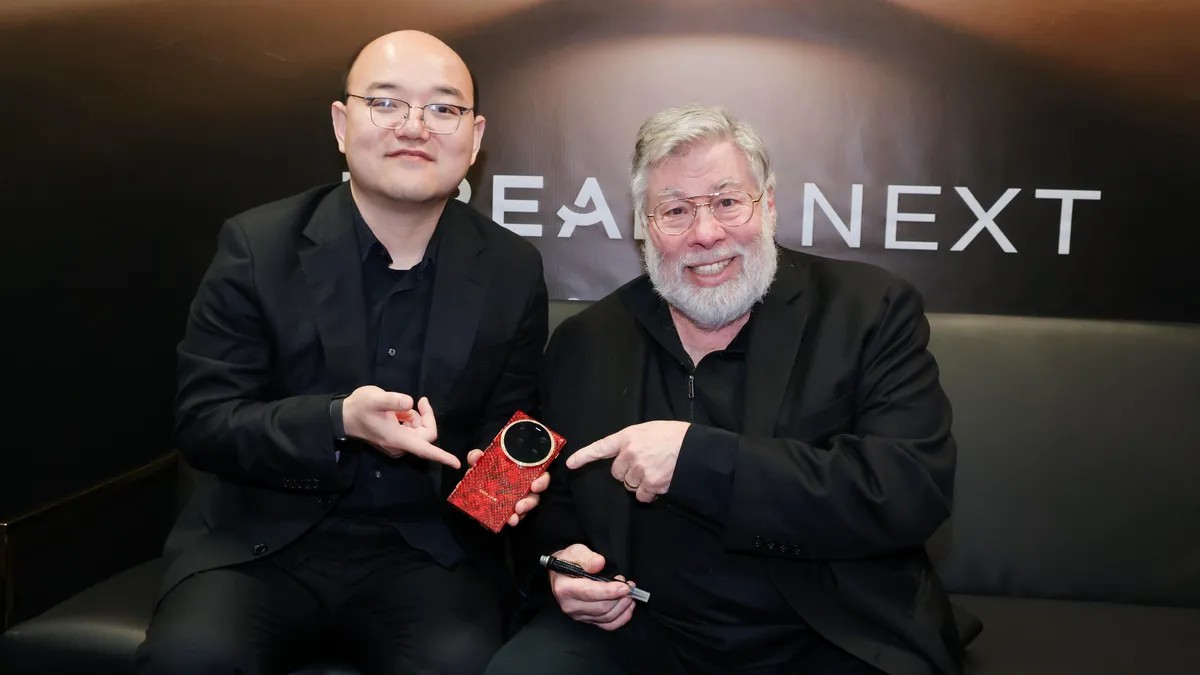
Dreame Technology, a company primarily recognized for its high-end robot vacuums and air purifiers, is making a significant pivot into the smartphone market. During its “NEXT” event in San Francisco, the Chinese tech giant unveiled two distinct devices: the Aurora Nex, a modular flagship, and the Aurora Lux, a luxury-focused handset. The announcement was bolstered by the presence of Steve Wozniak, co-founder of Apple, who appeared alongside Xinwei Chang, Dreame’s global president, to showcase the new hardware.
The Aurora Nex: A Modular Powerhouse
The Aurora Nex represents Dreame’s attempt to redefine smartphone flexibility through modularity. Rather than a static device, the Nex features a magnetic attachment system that allows users to snap on specialized hardware modules. This approach aims to solve the common consumer dilemma of carrying multiple devices by integrating functionality into a single, adaptable unit.
Key modular attachments include:
* A stabilized action camera for dynamic video capture.
* A telephoto module optimized for low-light, long-distance photography.
* A satellite communications module designed for emergency or off-grid connectivity.
* A smart AI module that reportedly learns and adapts to user behavior patterns.
Professional-Grade Imaging
Beyond modularity, the Nex is positioned as a tool for serious content creators. It boasts a 200-megapixel camera with a full focal range, capable of 3D spatial modeling and 8K video recording at 60 frames per second. The device also supports 14-bit raw multiframe compositing, a feature typically reserved for professional photography software, allowing for advanced post-processing and editing capabilities that standard consumer phones often lack.
Intelligent Operating System
Under the hood, the Nex runs on Aurora AIOS 1.0, Dreame’s proprietary operating system. The company describes the software as “proactive,” meaning it moves beyond traditional command-and-response interactions. Through a native “intelligent mode,” the OS utilizes touch, voice, and vision inputs to anticipate user needs and initiate actions automatically, reducing the friction of manual navigation.
The Aurora Lux: Craftsmanship Over Code
In contrast to the tech-heavy Nex, the Aurora Lux targets a different demographic: consumers who view smartphones as fashion accessories and status symbols. This non-modular device emphasizes physical aesthetics, drawing inspiration from fine jewelry and traditional craftsmanship.
The Lux features hand-detailing and 3D engraving, with five initial design variations available. Patrick Holland, CNET’s managing editor, noted that this strategy mirrors trends seen outside the U.S., where luxury phones are often purchased for their ability to match personal decor or style preferences—similar to customizing a refrigerator to match kitchen cabinets.
“To them, it’s like getting the fridge with doors that can be made to match their kitchen cabinets, and it’s less about brand.” — Patrick Holland, CNET Managing Editor
Market Implications and Uncertainty
The launch of these devices highlights a growing trend in the smartphone industry: segmentation. As hardware innovation plateaus, manufacturers are increasingly looking toward niche markets—whether through extreme customization (modularity) or high-end aesthetics (luxury)—to differentiate their products.
However, significant details remain unclear. Dreame has not announced pricing, release dates, or specific availability regions for either the Aurora Nex or the Aurora Lux. Additionally, a representative for the company did not immediately respond to requests for further comment. Without concrete launch timelines, it remains uncertain whether these devices will disrupt the mainstream market or remain limited-edition curiosities for early adopters and luxury enthusiasts.
Conclusion
Dreame’s entry into the smartphone sector with the Aurora Nex and Aurora Lux signals a strategic move beyond home appliances into personal computing. By leveraging modular technology and luxury design, the company aims to capture niche audiences that feel underserved by traditional flagship phones. Until pricing and availability are confirmed, however, the true impact of these devices on the global market remains to be seen.