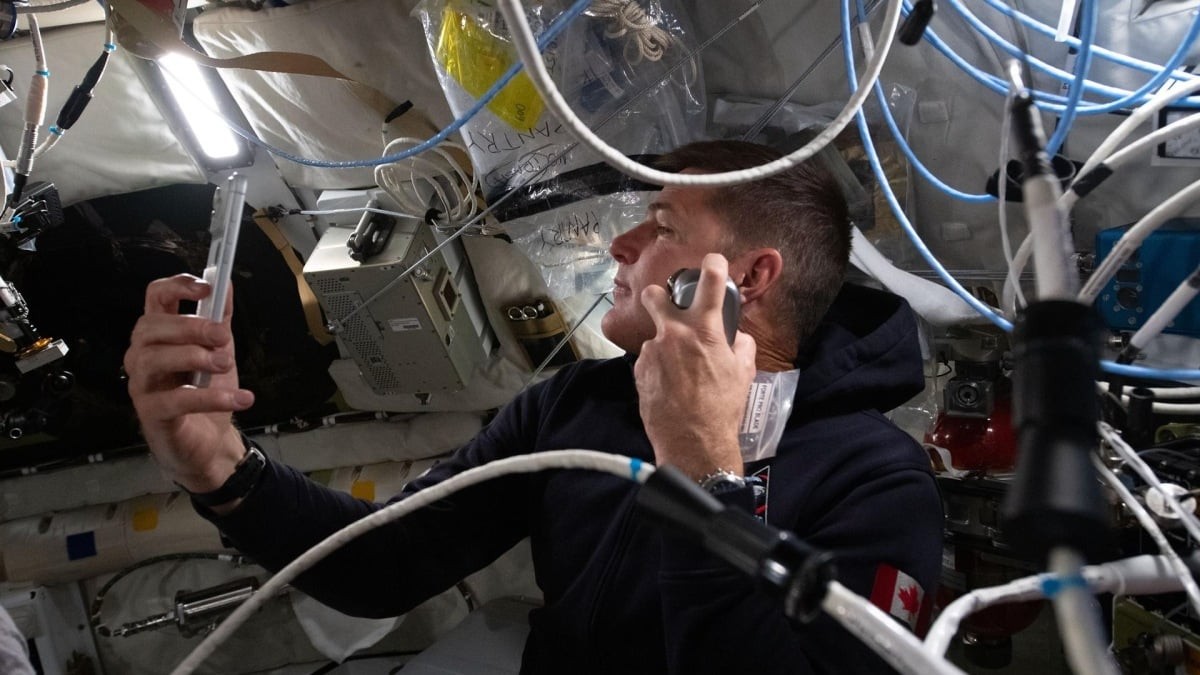
While the Orion spacecraft—affectionately nicknamed Integrity by its crew—is a pinnacle of aerospace engineering, its interior looks surprisingly familiar. As the Artemis II mission carries four astronauts 248,655 miles away from Earth, the crew is relying on a suite of high-end consumer electronics to document their journey, conduct science, and stay connected.
Documentation and Photography: From Selfies to Lunar Science
Capturing the unprecedented views of deep space requires more than just standard space agency equipment; it requires high-performance consumer hardware capable of handling extreme environments.
- Apple iPhone 17 Pro Max: The crew is using the latest flagship smartphone to capture high-quality selfies and daily life documentation. These devices serve as a bridge between the isolated crew and the public, providing a visual narrative of the mission.
- Nikon DSLR Systems: For serious scientific objectives, the astronauts are utilizing two Nikon D5 DSLR camera bodies. Equipped with various lenses and accessories, these cameras are essential for high-resolution photography of the lunar surface—a primary scientific goal of the mission.
- GoPro Action Cameras: GoPro technology is being used both inside and outside the spacecraft:
- Internal: Handheld HERO11 Black and MAX1 360-degree cameras are being used to record mission footage, which is slated for an upcoming Disney/NatGeo documentary.
- External: NASA has mounted modified HERO4 Black cameras onto the Orion solar arrays. These cameras must withstand the harsh vacuum and thermal fluctuations of space to provide critical exterior perspectives.
Computing and Connectivity
Beyond photography, the crew requires reliable interfaces for data management and communication.
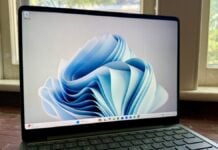
Each astronaut is equipped with a Microsoft Surface Pro tablet, referred to as a Personal Computing Device (PCD). These tablets are dual-purpose: they are used for complex scientific calculations and data analysis, as well as routine tasks such as managing emails and maintaining communication with Mission Control.
Why This Matters: The Democratization of Space Tech
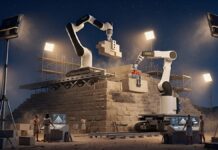
The presence of brands like Apple, Microsoft, and GoPro on a NASA mission highlights a growing trend in space exploration: the integration of Commercial Off-The-Shelf (COTS) technology.
In the past, space missions relied almost exclusively on bespoke, radiation-hardened hardware that was incredibly expensive and slow to develop. Today, the rapid innovation cycles of consumer electronics allow astronauts to use powerful, intuitive, and highly capable tools. While these devices require careful management in high-radiation environments, their ability to provide high-speed processing and superior imaging makes them invaluable assets for modern deep-space exploration.
Conclusion
The Artemis II mission demonstrates that the line between cutting-edge aerospace engineering and consumer technology is blurring. By utilizing familiar tools like iPhones and Surface tablets, NASA is enabling its astronauts to perform complex science and share the human experience of spaceflight with unprecedented clarity.