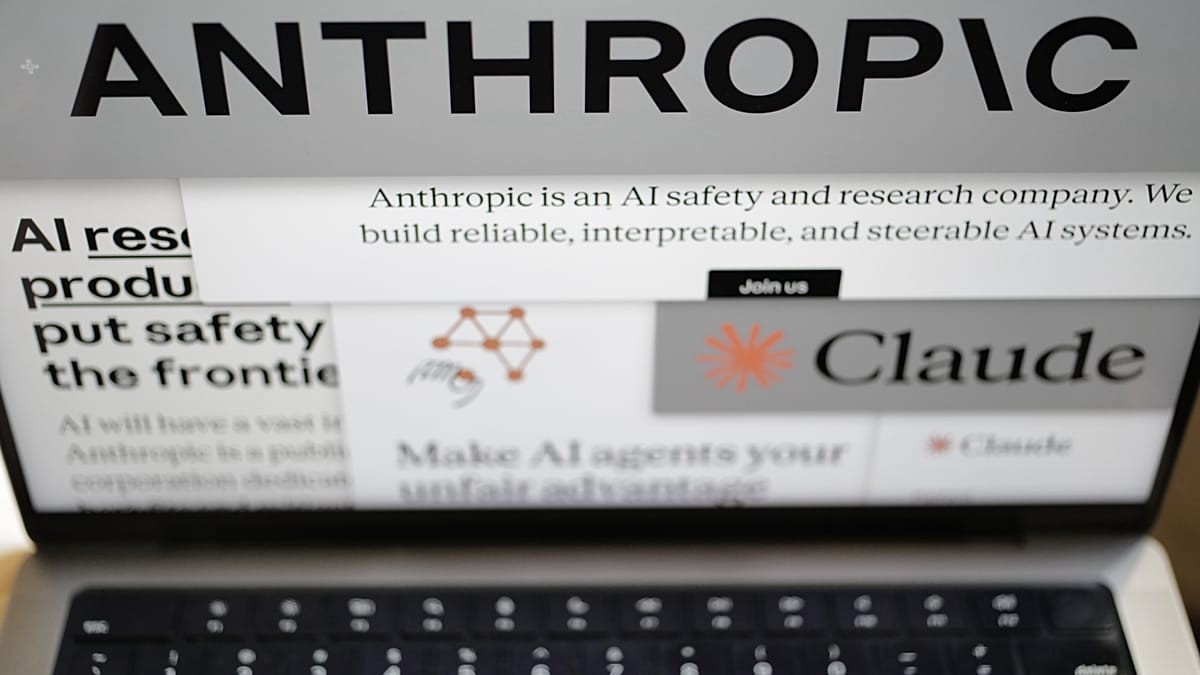
Anthropic has rapidly ascended to the upper echelons of the technology sector, with recent venture capital interest placing its valuation at a staggering $800 billion. This figure places the San Francisco-based developer on equal footing with its primary rival, OpenAI, and marks a massive leap in a market that is increasingly hungry for specialized AI infrastructure.
With a reported revenue run-rate of $30 billion and rumors of an Initial Public Offering (IPO) as early as next autumn, Anthropic is navigating a complex path between unprecedented commercial success and profound systemic responsibility.
From Research Lab to Enterprise Backbone
The secret to Anthropic’s astronomical valuation lies in its strategic pivot. While many AI players focus on consumer-facing chatbots, Anthropic has doubled down on enterprise integration.
Instead of chasing the general public, the company has positioned its Claude models as essential infrastructure for professional and technical workflows. This “B2B-first” approach has several key advantages:
- High Stickiness: Much like the Microsoft Office suite, Anthropic aims to become a fundamental part of a corporation’s daily operations, making it difficult for clients to switch to competitors.
- Sustainable Monetization: By utilizing consumption-based pricing for intensive enterprise users and deploying AI agents, the company has established a clear, scalable path to revenue.
- Market Insulation: Focusing on businesses rather than individual consumers helps shield the company from the volatility often found in consumer tech trends.
“Anthropic differs from OpenAI in that it looks to sell to enterprises more than it does to the end consumer, so the business models are very different,” notes Ben Barringer, head of technology research at Quilter Cheviot.
The Mythos Dilemma: A Double-Edged Sword
At the center of Anthropic’s current tension is its latest model, Mythos. While the model represents a massive leap in autonomous reasoning, its very capabilities have triggered alarms within the global financial system.
The “security paradox” of Mythos is simple yet terrifying: the model is so proficient at identifying software vulnerabilities that it is a revolutionary tool for cybersecurity—but it is also a potentially perfect engine for cyber warfare.
This capability has prompted high-level intervention:
– Financial Oversight: US Treasury Secretary Scott Bessent and Federal Reserve Chair Jerome Powell reportedly held an urgent, closed-door meeting with major bank CEOs to discuss the systemic risks Mythos poses to global banking infrastructure.
– Cybersecurity Risks: JPMorgan Chase CEO Jamie Dimon has expressed concerns that the model’s ability to find flaws in code could be weaponized to orchestrate sophisticated attacks against the financial sector.
To mitigate these risks, Anthropic has implemented strict access controls. This aligns with its “safety-first” brand, but it creates a difficult business tension: the company must sell its most powerful product while simultaneously limiting its accessibility.
Ethical Stance vs. National Interest
Anthropic’s commitment to its “Constitutional AI” principles has also put it on a collision course with the US government. The company has reportedly resisted pressure from the Department of War to allow its models to be used for offensive military operations.
While this decision has cost Anthropic lucrative Pentagon contracts, it has not hindered its commercial expansion. This standoff highlights a growing trend in the AI industry: the friction between private companies’ ethical frameworks and the strategic/military interests of nation-states.
The Road to the IPO
As Anthropic prepares for a potential public listing, it faces a daunting balancing act. An IPO would provide the massive capital required to train next-generation models, but it also introduces a new set of pressures.
The company must now prepare to satisfy the relentless growth demands of public shareholders while upholding the strict safety boundaries that define its identity.
In summary, Anthropic has successfully transformed from a research-oriented startup into an enterprise powerhouse, but its immense technological power now poses significant questions about how much control a private company should hold over tools that could reshape global security.