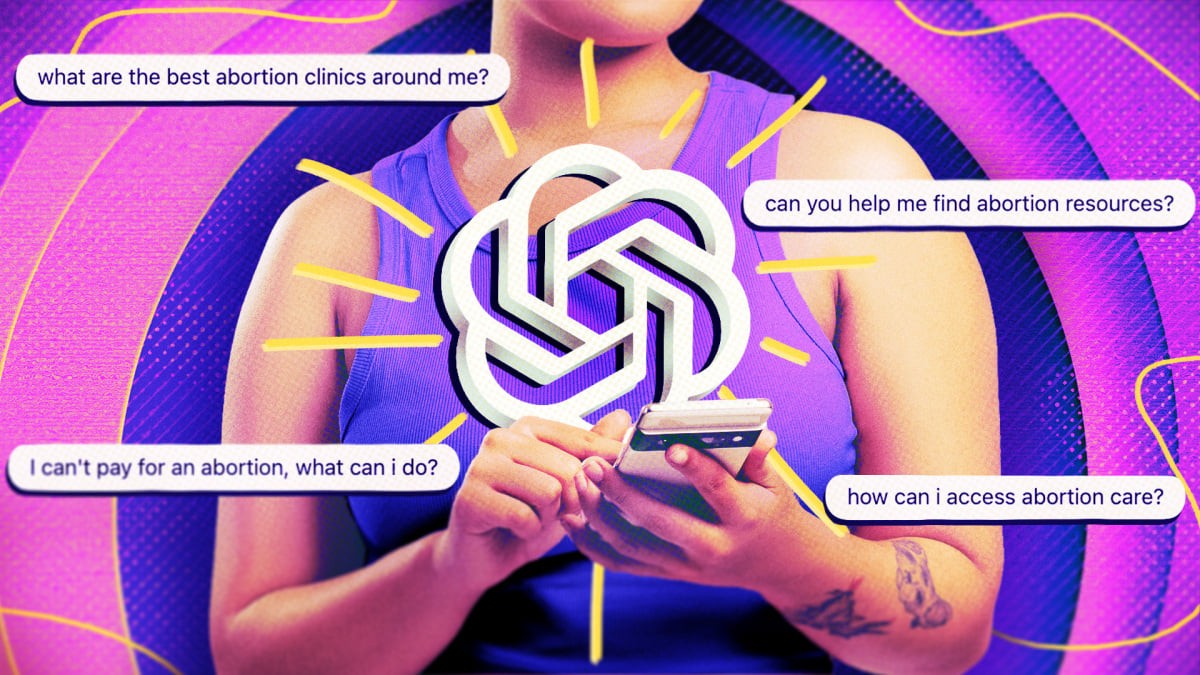
Artificial intelligence (AI) chatbots like ChatGPT are rapidly changing how people find information about abortion care, sometimes for better and sometimes for worse. Over the past year, these tools have become major referral sources for abortion organizations, with some seeing traffic increases of up to 300%. However, AI’s inconsistent responses—ranging from accurate guidance to outright misinformation—pose a growing challenge in a post-Roe world.
The Rise of AI-Driven Referrals
Organizations like Plan C Pills and I Need an A have seen significant spikes in traffic from ChatGPT and other AI platforms. This trend is particularly pronounced in countries with highly restrictive abortion laws, where people turn to chatbots to overcome social stigma and legal barriers. Women on Web, an international abortion pill provider, attributes a growing portion of its users to ChatGPT, indicating that AI is already reshaping access for those in need.
However, this increased access isn’t guaranteed. AI chatbots can also spread misinformation, including inflated prices from anti-abortion crisis pregnancy centers (CPCs). The technology’s reliance on repetition over accuracy means that biased or misleading content can easily surface, especially for localized queries.
The Algorithmic Gatekeepers
The influence of AI extends beyond search results. Tech companies like OpenAI, whose CEO has financially supported anti-abortion politicians, wield significant control over what information is accessible. Recent executive orders targeting AI compliance further raise concerns about ideological bias in these tools.
This situation has led some advocates to question the role of mainstream tech companies in reproductive health access. Ana Ramirez, co-executive director of Euki, argues that reliance on billion-dollar AI firms could undermine reproductive justice efforts. Instead, she emphasizes the importance of grassroots movements and privacy-focused solutions.
Navigating a Shifting Landscape
Advocates are adapting by flooding the internet with accurate information to influence AI’s responses. While SEO strategies that work for traditional search engines also apply to chatbots, the inherent unpredictability of AI remains a challenge. Unlike human medical providers, chatbots can deliver inconsistent or legally ambiguous answers, potentially exacerbating stigma and confusion.
Despite the risks, some see AI as a potential boon. Organizations are launching AI-powered tools like Charley, a scripted chatbot, and Planned Parenthood’s Roo, to provide reliable information. Others are partnering with smaller tech companies to build more targeted solutions.
The future of abortion access will depend on how advocates, tech companies, and policymakers navigate this evolving landscape.
Ultimately, the rise of AI in reproductive healthcare is a double-edged sword. While it can open doors for those seeking care, it also introduces new barriers and misinformation risks.