China is pioneering a new era in rail transit with the deployment of a full-scale robotic system in Hefei, Anhui Province. During this year’s Spring Festival travel rush – one of the world’s largest annual human migrations – metro stations and tunnels were patrolled by a “robot cluster” consisting of humanoid assistants, four-legged inspection robots, and drones. This marks China’s first attempt at complete AI integration within its rail network.
The Three-Tiered System
The project, led by Hefei Rail Transit’s Science and Education Center, is structured around three core functions:
- Passenger Service: Humanoid robots assist passengers with directions and transfer information within stations.
- Vehicle Inspection: Autonomous robots inspect trains, including wheels and bolts, using high-resolution cameras and ultrasonic sensors.
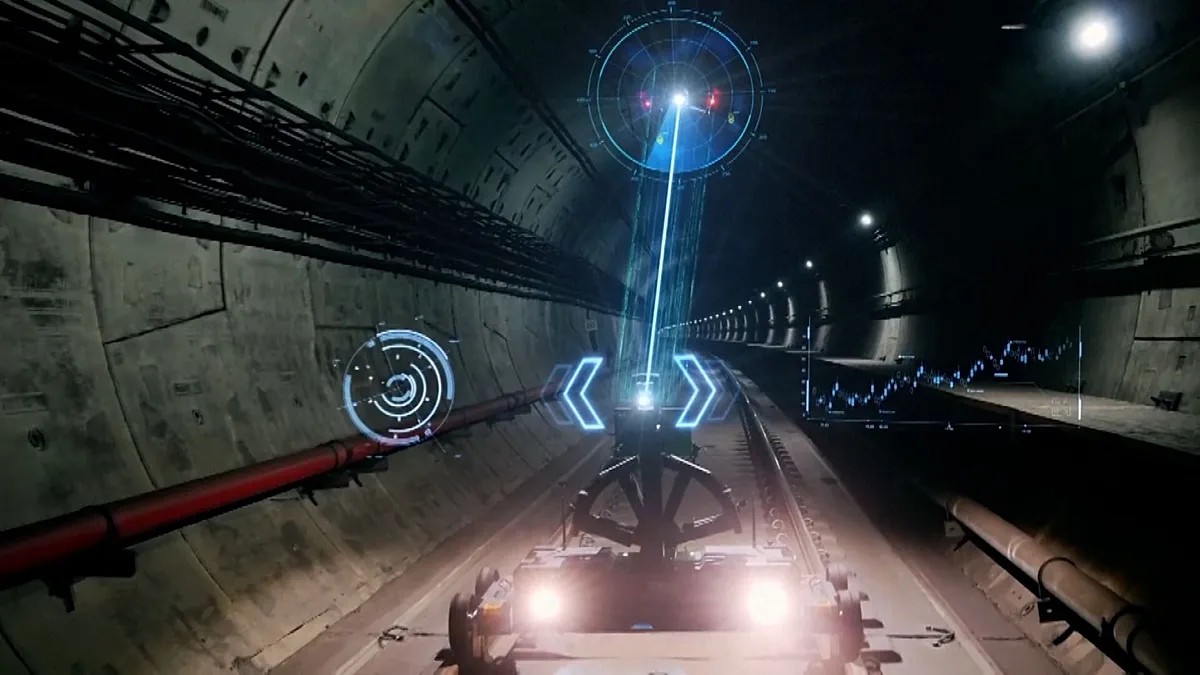
- Tunnel Inspection: Drones and robots patrol tunnels, detecting structural faults and safety hazards.
Dai Rong, the center’s director, explains the goal is to augment human labor, not replace it entirely. The system is designed to improve efficiency and reduce the physical strain on maintenance crews.
Under the Tracks: Autonomous Checks
One of the most ambitious aspects of the system is its deployment beneath trains. Robots navigate 1.5-meter-deep maintenance trenches, autonomously scanning for cracks, loose parts, and other defects. Traditional manual checks that once took hours are now completed in minutes. This rapid inspection capability is critical for maintaining safety and reliability during peak travel periods.
The Future: AI-Driven Automation
Hefei Rail Transit plans to integrate large AI models into the system. This will enhance the robots’ ability to process data, identify anomalies, and respond to emergencies with greater accuracy. Luo Lei, a senior supervisor, notes that the goal is to give the robots a more robust “central brain” for real-time decision-making.
Why this matters: This project showcases China’s aggressive push toward AI-driven infrastructure. The country has a unique combination of government support, rapid technological adoption, and a willingness to test advanced systems in real-world settings.
The experiment raises critical questions about the future of public transport: How much reliance on automation is too much? Will human oversight still be essential? And should other major cities be accelerating their own AI integration plans?
The Hefei system suggests that robots and AI will play an increasingly central role in urban safety, infrastructure monitoring, and the efficiency of public transport systems worldwide.