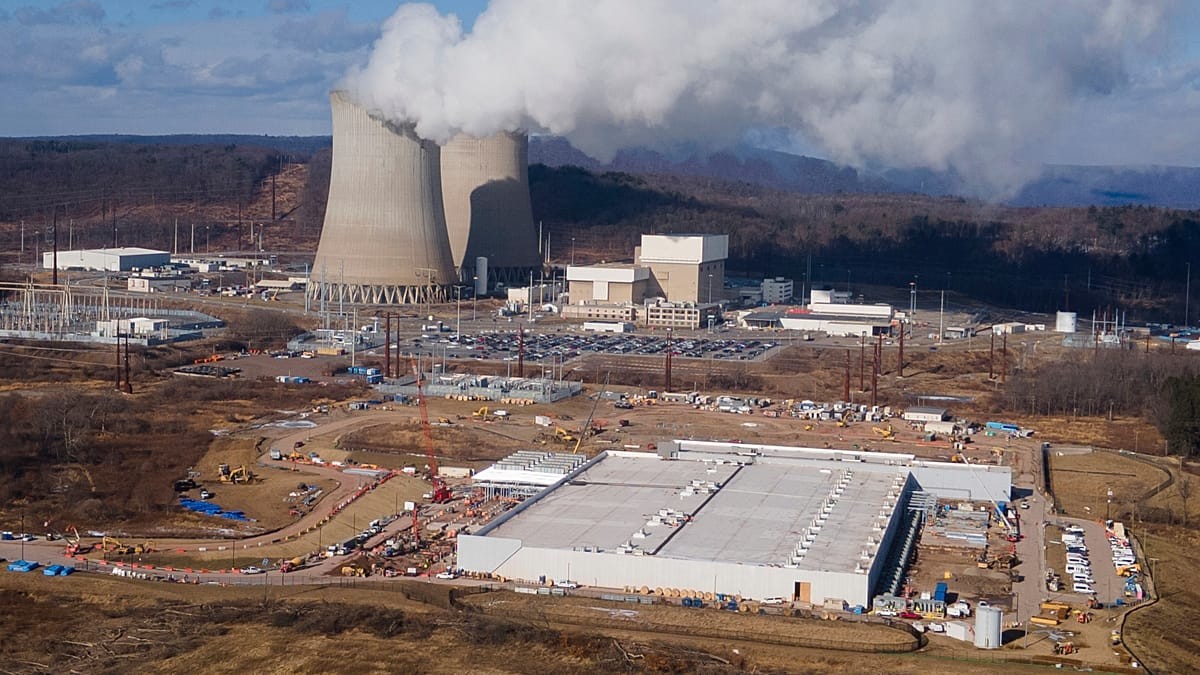
Artificial intelligence is rapidly expanding, and with it, a hidden environmental burden. A new study reveals that AI data centers could generate carbon emissions equivalent to a small European country or New York City by 2025. This surge in emissions isn’t just about power – it’s also about water. The same systems could consume as much water as the entire global bottled water industry uses annually.
The Scale of the Problem: Emissions and Water Use
The report estimates that AI data centers will be responsible for 32.6 to 79.7 million tonnes of carbon dioxide in 2025. For context, New York City emitted 52.2 million tonnes in 2023, while Norway’s total was around 31.5 million tonnes. This means AI alone could soon rival the emissions of entire nations.
Beyond carbon, AI’s water footprint is staggering. Between 312.5 and 764.6 billion liters of water will be needed to cool these systems in 2025, including direct use for cooling and indirect consumption in power generation. Tech companies rarely disclose this indirect usage, which can be up to four times higher than direct water use.
Data Centers: The Engine of AI’s Growth
The issue lies in the nature of data centers: massive facilities housing the servers that power AI, cloud computing, and streaming services. These servers generate intense heat, requiring energy-intensive cooling systems. As AI adoption accelerates, so does the demand for these data centers, driving up both energy consumption and water usage.
Europe’s Advantage, Global Transparency Gap
While the problem is global, Europe enjoys a relative advantage. With a carbon intensity of roughly 174 grams of CO₂ per kilowatt-hour (compared to a global average of 445 gCO₂/kWh and the US at 321 gCO₂/kWh), European data centers produce a smaller carbon footprint per unit of energy.
However, transparency remains a major obstacle. The study reviewed reports from Amazon, Apple, Google, Meta, and others, finding that no company publishes AI-specific environmental metrics. Despite acknowledging AI’s impact on energy consumption, disclosures remain vague.
The Need for Disclosure and Policy Change
The current lack of transparency makes accurate assessment difficult. Researchers used a top-down approach combining public sustainability reports with AI demand estimates, but significant uncertainty remains.
Urgent action is needed : the study calls for policies mandating disclosure of AI-specific metrics, including facility locations, operational scale, and water usage effectiveness (WUE) values. Without this data, managing the growing environmental impact of AI responsibly is impossible.
The tech sector must prioritize transparency and accountability as AI continues to evolve. Ignoring this issue will only exacerbate the environmental costs of this rapidly expanding technology.