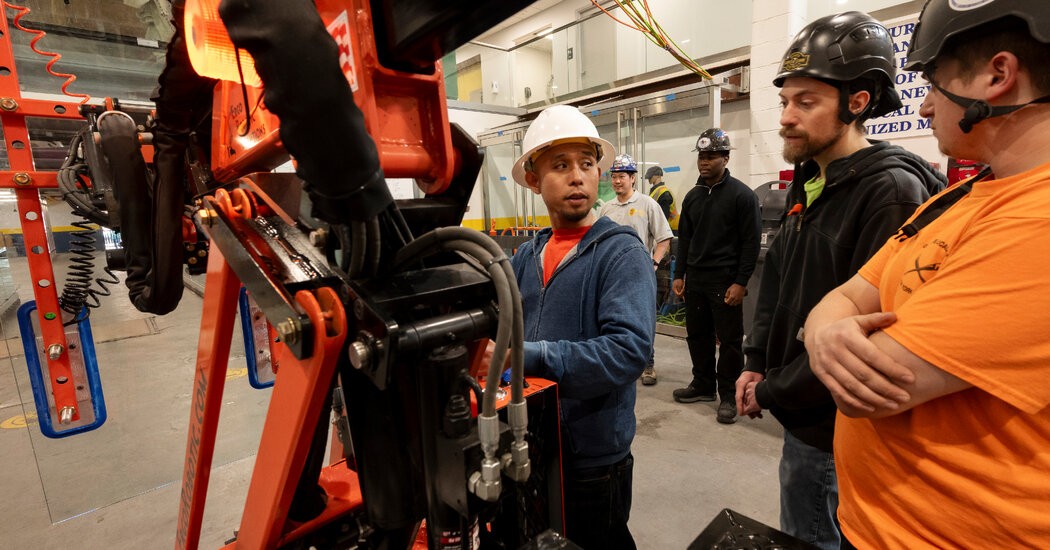
In the streets of Queens, a new kind of queue is forming. It isn’t for a new tech gadget or a trendy coffee shop, but for something far more traditional: construction apprenticeship applications.
Recently, 25-year-old Eddy Alvarez and his colleagues found themselves camping out overnight in the rain just to secure a chance at a career in the trades. Their experience is not an isolated incident; it represents a growing trend of young professionals seeking stability in an increasingly uncertain economic landscape.
A Shift in Career Priorities
For many young people, the traditional path of college followed by white-collar employment is losing its luster. Several key factors are driving this pivot toward manual trades:
- The Cost of Higher Education: The rising price of university degrees has made the “college-first” model a risky financial gamble for many.
- Job Insecurity and AI: There is a growing anxiety that entry-level service and administrative roles—such as the retail sales positions held by many in line—are vulnerable to automation.
- Tangible Longevity: As one applicant, 29-year-old John Pallares, noted, construction offers a type of physical, specialized work that current Artificial Intelligence cannot easily replicate.
From Retail to the Trades: The Competition Intensifies
The demand for these programs is currently outstripping supply at an alarming rate. In a recent instance at an insulators union office, the available pool of 100 applications was exhausted within just one hour.
The math highlights the intensity of the competition: 100 applications were available for only about 15 potential spots. This is a stark contrast to previous years, when union coordinators reported that applications remained available for days.
The shift from “waiting for opportunities” to “fighting for them” suggests that the trades are no longer seen as a fallback option, but as a strategic career move for those looking to outpace technological displacement.
Why This Matters
This trend signals a broader socioeconomic shift. As the digital economy becomes more volatile, there is a renewed appreciation for “recession-proof” skills. The move toward apprenticeships suggests that young workers are prioritizing specialized, physical expertise that provides a hedge against both inflation and the rapid advancement of automation.
The sudden surge in interest reflects a pragmatic generation seeking stability through skills that machines cannot easily replace.
Conclusion
Driven by the rising costs of education and the looming threat of AI-driven job loss, young New Yorkers are increasingly viewing construction apprenticeships as a vital gateway to long-term economic security.