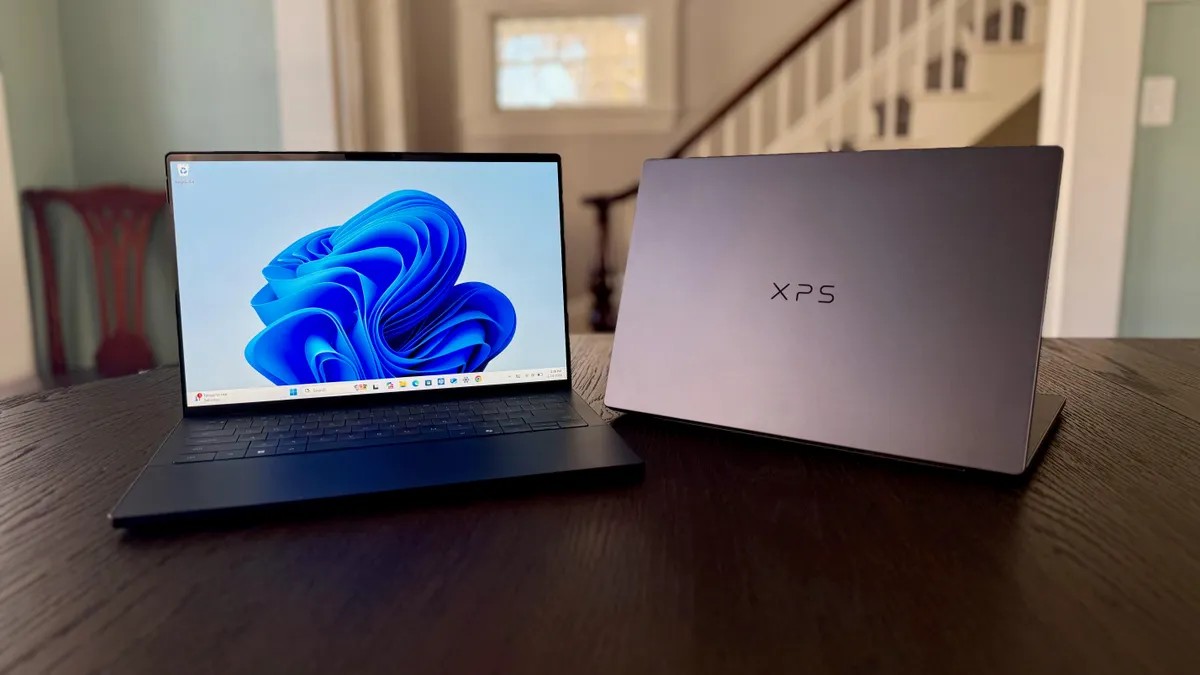
Dell has reintroduced its classic XPS line with the new XPS 14, a significant departure from last year’s poorly received Dell Premium laptops. The move mirrors Coca-Cola’s reversal of “New Coke” in 1985, as Dell quietly shelved its rebranded laptop series after widespread criticism. The XPS 14 aims to compete directly with the MacBook Pro, offering a high-performance Windows alternative without the excessive bulk of its predecessors.
Correcting Past Mistakes
Dell’s previous attempt at a redesigned laptop lineup, the Dell Premium series, failed due to an emphasis on aesthetics over usability. These models were notably heavy, earning comparisons to granite in weight. The XPS 14 addresses this directly, weighing in at under 3.2 pounds—a substantial improvement over the 3.8-pound Dell 14 Premium. This redesign prioritizes function without sacrificing build quality, featuring a CNC-machined aluminum chassis that maintains rigidity while remaining lighter.
Performance and Configuration
The XPS 14 is available with Intel’s latest Panther Lake processors, including Core Ultra 5, 7, and X7 options. The baseline model ($1,600) includes a Core Ultra 5 325, 16GB of RAM, and a 512GB SSD with a 1,920×1,200 IPS display. Higher-end configurations, equipped with Core Ultra X7 processors and up to 32GB of faster 9,600MHz RAM, deliver significantly improved performance. The top-tier OLED model ($1,950) offers a sharper 2.8K resolution with superior contrast and color accuracy, covering 100% of the sRGB and P3 color gamuts.
Graphics and Gaming
The XPS 14’s integrated graphics options vary depending on the processor. The Core Ultra 7 includes four Xe3 graphics cores, suitable for general use, while the Core Ultra X7 boasts Intel’s Arc B390 with twelve Xe3 cores. This makes the X7 variant capable of handling gaming and content creation tasks, achieving over 60 frames per second in titles like Guardians of the Galaxy at 1080p on high settings. Though it doesn’t match dedicated GPUs, the integrated Arc B390 outperforms the M3 MacBook Pro in certain benchmarks, such as 3DMark Steel Nomad.
Battery Life and Physical Design
Despite the OLED panel consuming more power, the XPS 14 delivers impressive battery life. The IPS model lasts over 21 hours, while the OLED version averages nearly 15 hours. This performance rivals the MacBook Pro but falls short of the HP OmniBook 5 14’s industry-leading battery life. The XPS 14 also features thinner display bezels and a compact design, measuring 12.2 x 8.3 inches – smaller than the MacBook Pro’s 12.3 x 8.7 inches. Dell offers the XPS 14 in Graphite, with a Shimmer color option launching soon.
Key Improvements: Keyboard and Webcam
Dell has ditched the unpopular touch-sensitive Function row in favor of physical keys, a welcome change for users who prefer tactile feedback. The keyboard features a latticeless design with improved key stability. The 8-megapixel webcam captures 4K photos and 1440p video without the notch found on some MacBooks, while Windows Hello facial recognition is included. However, the XPS 14 notably lacks a fingerprint scanner.
Pricing and Availability
The Dell XPS 14 starts at $1,350, with prices increasing rapidly depending on configuration. It is available now in the US, UK (from £1,599), and Australia (from AU$3,249). Despite being expensive, the XPS 14 represents a competitive alternative to the MacBook Pro for Windows users seeking a premium laptop experience.
In conclusion, the XPS 14 marks a successful return for Dell’s flagship line, offering a well-balanced combination of performance, portability, and design. By addressing the shortcomings of its predecessors, Dell has created a laptop that not only meets but exceeds expectations for high-end Windows devices.