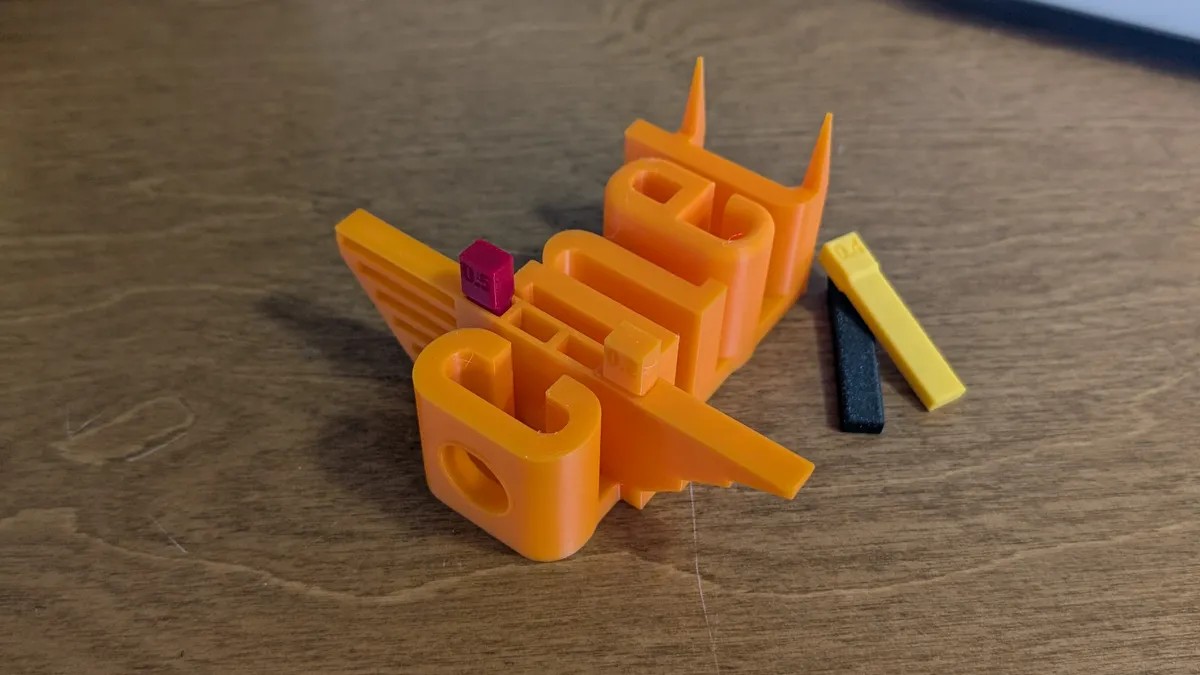
For four years, CNET has rigorously tested 3D printers using a custom benchmark designed to expose flaws in even the most advanced machines. This test, created in collaboration with 3D artist Fixumdude, pushes printers to their limits across nine key metrics: dimensional accuracy, overhangs, bridging, arch printing, ringing, stringing, small point detail, bed adhesion, and tolerance.
Why this matters: The rapid evolution of 3D printing means older testing methods quickly become obsolete. A printer passing this benchmark signals a leap in current hardware and software capabilities.
The CNET Benchmark Explained
The benchmark isn’t just about speed or build volume; it’s about consistency. The print includes specific features designed to exploit common weaknesses:
- Dimensional Accuracy: The model measures 30mm tall with a 5mm base and a 7mm slash, testing precise extrusion.
- Overhang/Cooling Tests: The slash includes overhangs at 50°, 60°, and 70° angles, forcing the printer to cool filament mid-air.
- Bridging: Gaps from 8mm to 24mm test the printer’s ability to print in empty space.
- Arch Printing: A 15mm diameter circle on the “C” tests curvature accuracy.
- Ringing: Embossed and engraved CNET logos reveal imperfections in movement.
- Stringing/Small Point Test: Two spires test filament control in fine details.
- Bed Adhesion/Tolerance: Four pegs with varying gaps (0.2-0.5mm) verify adhesion and precision.
The Bambu Lab H2C: A Perfect Score
The Bambu Lab H2C is the first 3D printer to pass all nine tests with a perfect score. Previous contenders, like the Prusa Core One, came close but struggled with overhangs and bridging.
Why it’s significant: The H2C’s success isn’t due to groundbreaking new technology, but rather hundreds of refined tweaks that deliver consistent, repeatable performance. The printer features a dual-extruder setup with hot-swappable nozzles, but its real advantage lies in execution.
What This Means for 3D Printing
The H2C’s performance forces a reassessment of current testing standards. The benchmark, once a reliable way to separate high-end printers from the rest, has been conquered. This means the test itself must evolve to remain effective.
The future of 3D printing: Expect manufacturers to focus less on flashy features and more on fine-tuning existing technology for maximum precision. The H2C isn’t just a good printer; it’s a sign that 3D printing is entering a new era of refinement.
The bar has been raised, and the industry must adapt.