


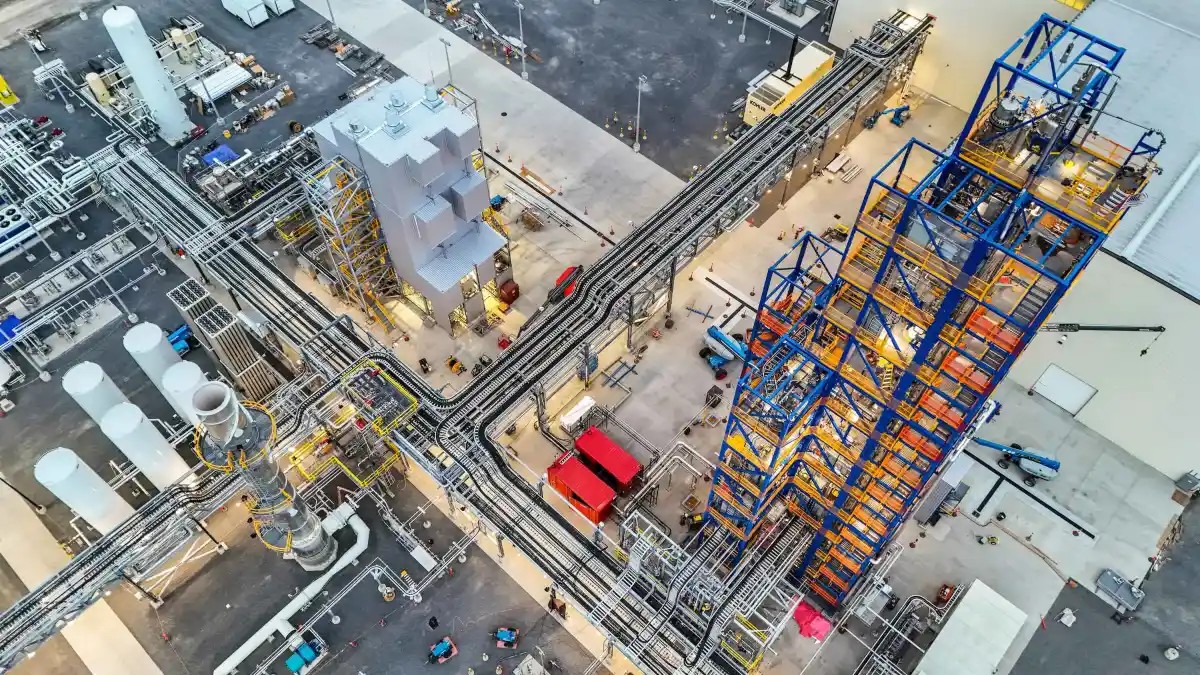
The electric vehicle market in the United States is cooling off. It’s messy, it’s political, and it’s creating headwinds that few wanted to see. But Sila Nanotechnologies isn’t waiting for consumer demand to snap back. The battery materials startup just raised $300 million to expand its factory in Moses Lake, Washington.
Why the move now?
Because the global landscape is shifting, and supply chains are desperate for alternatives. Sila’s cash grab signals a bet that the long-term need for better batteries outweighs short-term sales dips. They plan to use the funds to ramp up production of anode material. Specifically, they want enough to power over 100,000 electric vehicles annually once the expansion hits full stride.
How Silicon Anodes Challenge Chinese Graphite Dominance
Most lithium-ion batteries currently rely on graphite anodes. That’s not controversial. The controversy lies in who controls the supply. According to Benchmark Minerals Intelligence, Chinese companies control about 75% of the graphite supply chain. This dependency creates vulnerability. Tariffs. Trade wars. Political leverage.
Sila offers a different path.
Their anode material is a silicon-carbon composite. It’s one of the few viable alternatives available in sufficient quantity today. For automakers outside of China, this matters. It’s a strategic hedge. It reduces reliance on a single geographic source for critical components.
But the benefits aren’t just geopolitical. They’re performance-based. Sila claims its material can store up to 40% more energy than traditional graphite anodes. Faster charging times are also part of the package. That’s the kind of spec sheet upgrade that actually moves units.
“Sila’s anode material can store up to more energy than traditional graphite anodes and charge faster.”
The technology didn’t appear overnight. The company has been developing this material for 15 years. The founder and CEO, Gene Berdichevky, was Tesla’s seventh employee. He knows what it takes to scale hardware. He knows the pain points of manufacturing at volume.
Scaling Production in Moses Lake
Sila started production at its Moses Lake plant last September. The initial capacity? About 2 gigawatt-hours (GWh) of silicon-carbon anode material per year. That’s impressive for a startup. It’s not enough for the major OEMs yet, but it proves the concept.
The new capital changes the scale entirely.
The expansion will allow the plant to produce tens of gigawatt-hours annually. We’re talking about a jump from single-digit capacity to a significant industrial output. Enough for 100,00+ EVs. That puts Sila in the conversation with the big players in battery material supply.
They already have deals on the books. Mercedes and Panasonic have committed to supplying Sila’s material. They also sell to consumer electronics brands like Whoop, as well as drone and satellite manufacturers. These aren’t just pilots. They are real revenue streams.
The AI Energy Storage Wildcard
Let’s talk about the elephant in the room. Electric vehicle sales in the U.S. are down year-over-year. They dropped from a spike in 2025 before tax credits sunsetting. The political rhetoric in the Trump administration hasn’t exactly helped either. Soft demand is a real problem.
But EVs aren’t the only battery users.
Energy storage systems are eating market share. Demand for electricity is growing. AI data centers are becoming major buyers of grid-scale batteries. This is a parallel market that doesn’t care as much about federal subsidies. These facilities need power. They need backup. They need to manage peak demand charges.
Big batteries allow data centers to run solar and wind power around the clock. It’s economics, not ideology. And it’s a massive market.
Sila’s material works here too. If the company can supply both the auto industry and the grid infrastructure boom, they hedge their bets. They don’t have to rely on one sector’s fortunes.
Who Is Funding the Bet?
The latest round was led by Atreides Management and Sutter Hill Ventures. They were joined by a heavy list of participants: 8VC, Bessemer Venture Parties, Matrix Partners, and funds advised by T. Rowe Price.
This isn’t angel money. These are institutions betting on industrial-scale materials science.
According to PitchBook, Sila has now raised about $1.3 billion in total. That includes previous rounds. The $300 million is the latest infusion, but the cumulative confidence is high.
Global EV sales are actually up 27% year-over-year, according to Benchmark. The U.S. is lagging. The rest of the world isn’t. And China is pushing its own technologies hard. Sila is positioning itself in the middle of a global tug-of-war.
The factory is in Washington. The materials are American-made. The customers are global.
Does the softening U.S. market matter? Not if the global demand holds.


