


The tablet spent almost 20 years in the technological purgatory of “good idea, bad timing”. They existed. They were functional. But nobody bought them. Things changed in April 2010. Apple dropped the iPad, and suddenly the market was on fire.
The reason is obvious. It looks like an iPhone. Uses the same iOS. Very familiar. People want this simplicity. It’s flat glass, there are no physical buttons, it’s pure touch. It’s very cool. It’s portable. It worked.
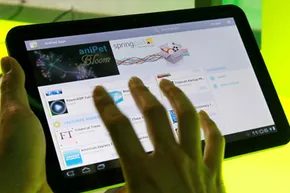
Android wasn’t going to let Apple have all the fun. Motorola has released the first true Android tablet competitor, the Xoom. If you’ve ever seen a Xoom, you’d think it was an iPad. Same touch interface. Swipe to scroll. Tap to open. Both platforms take you to their respective app stores where you can download the software directly to your device. To the casual observer, the hardware similarities are striking.
But the real question wasn’t about the hardware. It’s a matter of choice.
One product and an open ecosystem
Comparing an iPad to an Android tablet is a strange approach. Because the playing field is completely different. I’m not comparing apples to oranges. It compares a particular apple to a basket of fruit randomly collected from different orchards.
Apple makes the iPad. Period. At the time, there were only two models: the original iPad and the iPad 2. It was very simple. Predictable.
Android is different. Google provides the OS, and any manufacturer that can make the hardware for the OS can make the tablet. This means diversity. It also meant inconsistency. There are big players like Motorola and Samsung, but there are also niche markets. For example, Barnes & Noble released the Nook. Technically, this is an Android tablet. Practically? This is an e-book reader with a limited selection of apps and features. It’s a tablet in name only.
This fragmentation makes direct comparisons difficult. You can’t just compare “iPad and Android”. You have to compare the iPad to certain Android tablets. The Xoom was the most important thing in the launch.
Motorola Xoom: Paper Specifications
When Motorola launched the Xoom, they had one goal in mind. beat the iPad’s specifications on paper. They knew the iPad had a lot of momentum, so they went for raw power.
The Xoom is equipped with a dual-core processor. In theory, this means the software can run twice as fast as a single-core iPad. However, it’s not just about speed. It’s about a feature that Apple didn’t take into account.
The Xoom had cameras. Two of them. The 5 megapixel camera points forward and records everything you do. There is also a 2 megapixel camera for video chatting with users. This was huge for early adopters who were frustrated by Apple’s refusal to include a camera in the original iPad. You can actually see your face when you’re talking to someone.
The screen has also grown. 10.1 inches compared to the iPad’s 9.7 inches. The resolution is 1280×800 and the image is slightly sharper than the iPad screen. What if 32GB of RAM isn’t enough? You can insert a MicroSD card. Expandable storage space. The iPad stubbornly refuses to provide this feature.
In theory, the Xoom wins. Specs are very good. The hardware was more versatile.
Application Gap: Why Hardware Doesn’t Matter Yet
But here’s the kicker. For most users, the iPad was still the better choice.
Why? Because software is more important than silicon.
When the Xoom hit store shelves, programmers had been developing apps for the iPad for almost a year. Apple’s App Store was full. Thousands of programs already existed, from games to productivity tools. Developers were optimizing for iOS. This is a mature ecosystem.
Android app store? It’s almost empty.
Developers hadn’t caught up to the Android tablet market yet. The Xoom might have a dual-core processor and expandable memory, but without software, it was just an expensive brick. The lack of apps meant that good hardware was useless to the average consumer.
Apple knows this. They weren’t just selling hardware; What they sell is an ecosystem. And they had months of head start.
Then Apple struck again. They didn’t just stick with the original iPad. They replaced it with the iPad 2. Faster now. Thinner. Better cameras. A front-facing camera for video calling has finally joined the bandwagon.
The hardware war intensified. But the real battle was happening in the app stores.
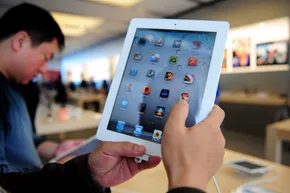

The iPad 2 was introduced in March 2011, just a month after the Motorola Xoom hit stores. Apple’s hardware upgrade neatly dismantled Motorola’s claimed key advantages. Like the Xoom, the iPad 2 has front and rear cameras and supports FaceTime video calling. It also has a dual-core processor. The device is thinner and lighter than the original iPad, a design choice that Apple has highlighted in its marketing campaign.
But the market has not stopped. Android tablets are released every few weeks. Each new model tries to beat the iPad 2 in some way. Some compete on price. For example, the ASUS Eee Pad Transformer turns into a laptop with an optional keyboard. That’s about $200 less than the iPad 2.
Some focus on the form factor. The Samsung Galaxy Tab is thinner and lighter than the iPad 2. The price is also slightly lower. Depending on the manufacturer, sometimes they just want to look cool. Apple has always been a hard company to beat when it comes to stylish hardware.
Where Android still wins
One area where Android tablets uniquely outperform the iPad 2. It is the resolution of the video. At the time, most Android devices ran at a resolution of 1,280 x 800 pixels. Like its predecessor, the iPad 2 has a maximum pixel count of 1,024 x 768.
Android devices also tend to be more user-upgradeable. Apple limits the functionality to the standard model. Apple also doesn’t support USB connectors. For users who rely on external drives and peripherals, the lack of connectivity is a big difference.
Battery life is also a battleground. Most reviewers agree that the iPad 2 can go longer without charging. So while the iPad 2 has a premium build and all-day battery life, it comes at the expense of resolution and expansion options.
App ecosystem war
In the most important area: apps, the iPad 2 is way ahead. The Apple App Store has more than 100,000 applications. This number is even higher if you include the approximately 500,000 iPhone apps. Most of them work on iPad 2. You may not be able to take advantage of the large screen. But they work.
Determining the exact number of Android apps is even more difficult. Google does not publish this number. A New York Times blog published in July 2011 estimated the number to be 232. That number seems paltry. It does not include Android smartphone apps that can also run on tablets. It also misses brand-specific apps. Samsung has Galaxy Tab apps. Motorola has Xoom apps.
Despite these caveats, Apple has won the app war. Popular games like Angry Birds and Plants vs. Zombies can be played on both platforms. But the sheer volume of iOS is second to none.
Open garden and closed garden
There are fundamental differences in how Apple and Android applications are handled. Apple allows the sale of applications only through the App Store online store. All apps must be approved by Apple before they can be sold. This creates a controlled environment.
Android has a more open model. Anyone can publish Android apps. You don’t need to get a stamp of approval first. This distinction is more important to programmers than to end users. But it encourages developers to move to Android. More Android apps may appear in the future.
Make your choice
Whether you buy an iPad 2 or an Android tablet, it all depends on what’s most important to you. Hardware? software? price?
If hardware specs are important to you, compare the iPad 2 to every Android tablet on the market. This is a difficult task. Check out the specific reviews for each model.
If software is important to you, you’ll probably want the iPad 2. It is far more likely to have exactly the apps you need. The ecosystem is enriched. The quality control is higher.
If price is important, the calculation changes. Unless you’re customizing a tablet like the Barnes & Noble Nook, you can’t beat Apple’s price by much. According to the report, smart users can customize the Nook to behave more like a full-fledged Android tablet. But for most people, there is a limit to how much they can save. You’re unlikely to save more than $200.
If that $200 makes a difference, an affordable Android tablet like the Asus Eee Pad Transformer might be an option. The Transformer offers versatility. Add a keyboard. The costs are lower. However, your application library will be sacrificed. You sacrifice the premium feel.
For many, the choice is left up in the air. The iPad 2 offers a sophisticated but expensive experience. Android offers flexibility, high resolution and low prices. However, the application gap is huge.
For more information about the iPad and other technology-related topics, click on the links on the following pages.


